English
 中文简体
中文简体 русский
 Français
 Español

When you start comparing 3 wheel and 4 wheel forklifts, the first question is usually which one is better. The honest answer is that neither configuration wins outright. The right choice depends on your aisle width, load weight, floor surface, and how often operators need to turn in a tight corner. If your facility is a high-density warehouse with narrow racks, a 3 wheel forklift will save you space and time on every shift. If your operation runs heavier pallets over rough concrete or asphalt, a 4 wheel model will give you the stability and load capacity you need to work safely. At Hecha Intelligent Equipment, we build electric forklifts in both configurations, and the decision starts with a clear look at your everyday work environment.
Quick conclusion: pick a 3 wheel forklift for narrow aisles and light loads on smooth floors. Pick a 4 wheel forklift for heavier loads, higher lifts, and any uneven outdoor surface.
The Core Difference in a Nutshell
The fundamental difference is wheel placement and steering geometry. A 3 wheel electric forklift has a single steerable wheel at the rear, and the two drive wheels are mounted at the front. This design allows the rear wheel to turn much sharper, cutting the turning radius by roughly 20 to 25 percent compared with a similar 4 wheel unit. A 4 wheel forklift uses two rear steering wheels, which spreads the load across more contact points and increases the footprint.
This structural change has two direct consequences. The 3 wheel machine turns faster and operates in narrower aisles, while the 4 wheel machine distributes weight more evenly and improves stability at higher lift heights and heavier loads. That trade-off is the reason you cannot simply pick the most popular option. You have to measure your own constraints first.
Maneuverability: Where the 3 Wheel Design Excels
In a warehouse with racking, every extra inch of turning clearance can become usable storage space. Three wheel forklifts are famous for their ability to pivot almost in place. They often need only the minimum aisle width recommended by the racking manufacturer, while a 4 wheel forklift may require an aisle that is significantly wider. In practical terms, this can mean adding a whole extra row of pallet positions in the same footprint.
The shorter length to fork face also matters. Many 3 wheel models sit about 6 feet from the fork face to the rear, while equivalent 4 wheel models can reach 7.5 feet. That 1.5-foot difference adds up when you back into a dock or block a traffic lane. For applications with frequent stops, starts, stack rotation, and load picking in tight aisles, the 3 wheel layout is usually the better answer. Need to move more pallets in less time with less maneuvering? That is where the 3 wheel forklift earns its keep.
Load Capacity and Stability: Why 4 Wheel Models Hold the Edge
Stability is the price you pay for agility. Four wheel forklifts have a longer wheelbase and a wider front axle, so the load stays more balanced as the mast goes higher. This becomes critical when you lift pallets above 5 tons or when the load center is not perfectly centered. For heavy-duty tasks indoors or outdoors, the 4 wheel configuration is the safer and more durable choice.
Load capacity is another differentiator. Most 3 wheel electric forklifts top out around 2.5 tons, while 4 wheel electric models can be rated from 2 tons to 5 tons and beyond, depending on the battery and mast configuration. If your average pallet weighs under 2 tons and your aisles are tight, a 3 wheel unit is ideal. If your loads are heavier or your floors are uneven, the 4 wheel platform gives you the margin you need. At Hecha, our 2-5 ton lead-acid battery forklift is an example of a 4 wheel design built for consistent, heavy-duty warehouse cycles.
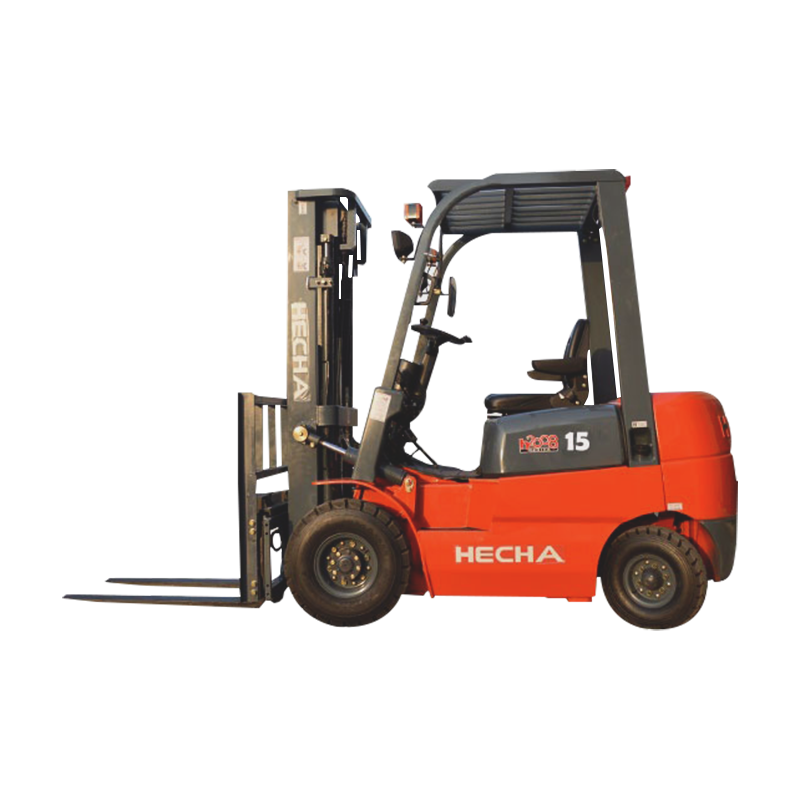
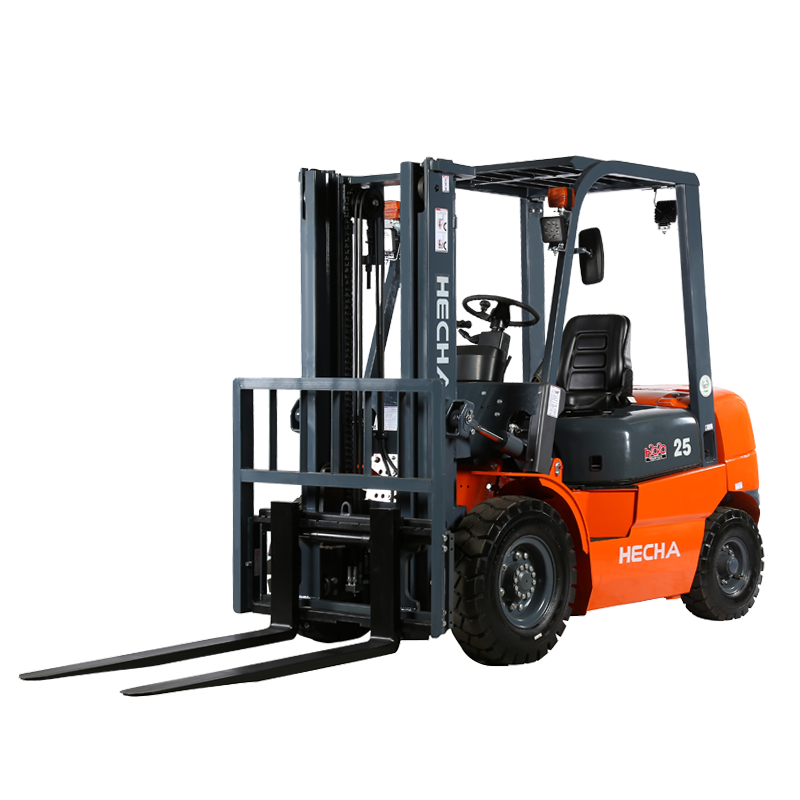
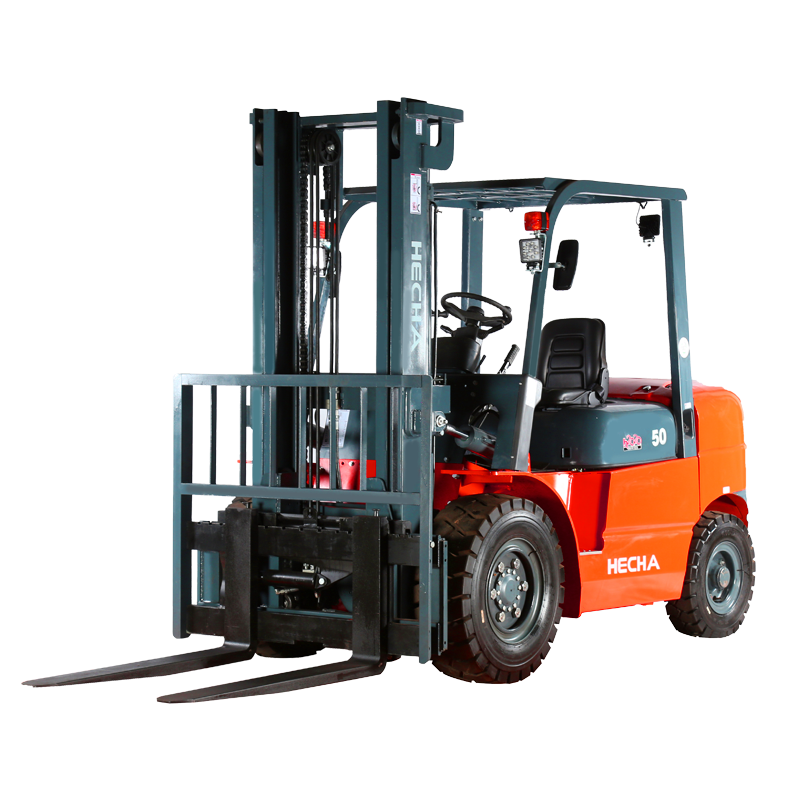
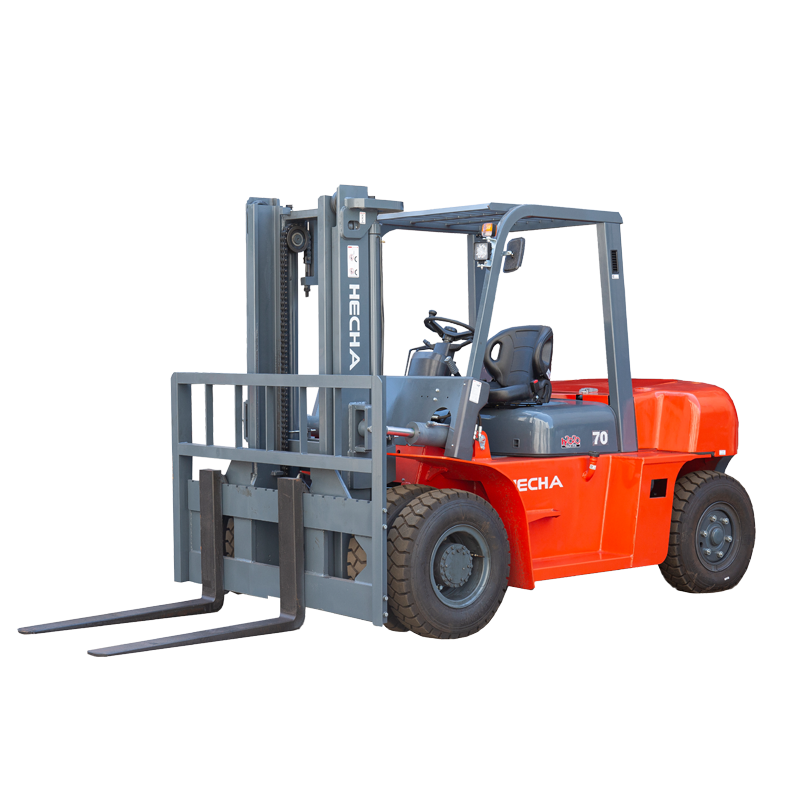
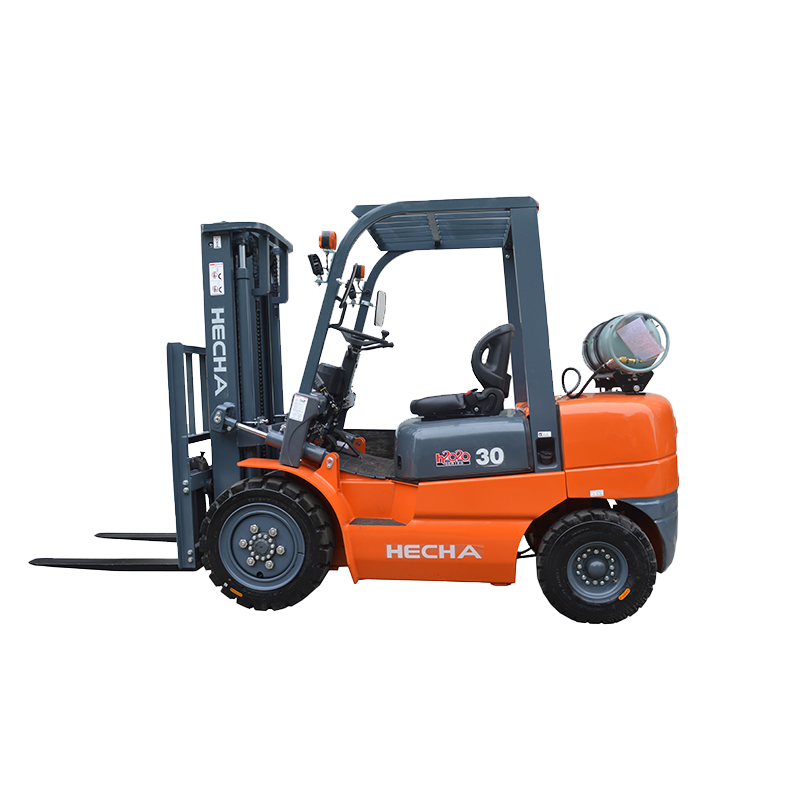
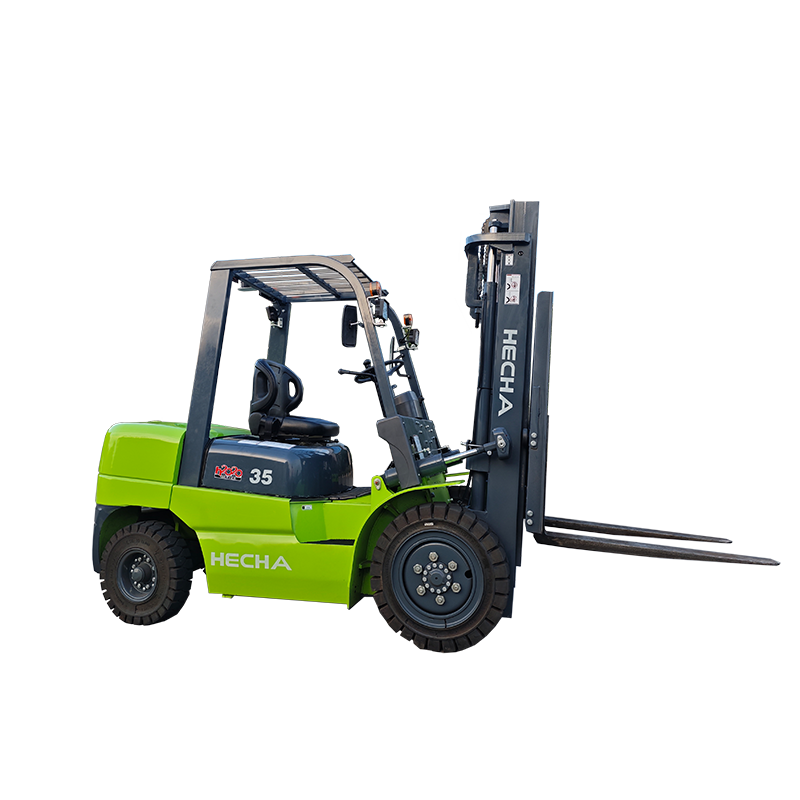 4-Wheel Lead-Acid Battery Electric Forklift for Heavy-Duty UseThis forklift features a 4-wheel lead-acid battery design, providing stability and strong load capacity for consistent heavy-duty warehouse operations, as highlighted in the context of uneven floors and high-capacity needs.View Product →
Energy Efficiency and Operating Costs
Because a 3 wheel forklift is lighter and has fewer contact points to drag, it generally consumes less energy per cycle. Operators also report faster acceleration, which shortens the time spent moving from one pick location to the next. For facilities that run electric forklifts through a full shift, this efficiency can translate into lower energy bills and longer run time from a single battery charge.
The battery type matters as much as the wheel count. Lithium batteries offer faster charging and more usable capacity than lead-acid batteries, while lead-acid remains a lower upfront cost. To understand how these two options affect total cost of ownership, you can read our detailed comparison of lithium and lead-acid batteries for modern warehouses. For newer lithium models with good efficiency and fast charging, Hecha offers a 2-3.5 ton lithium electric forklift that is well suited for multi-shift operations.
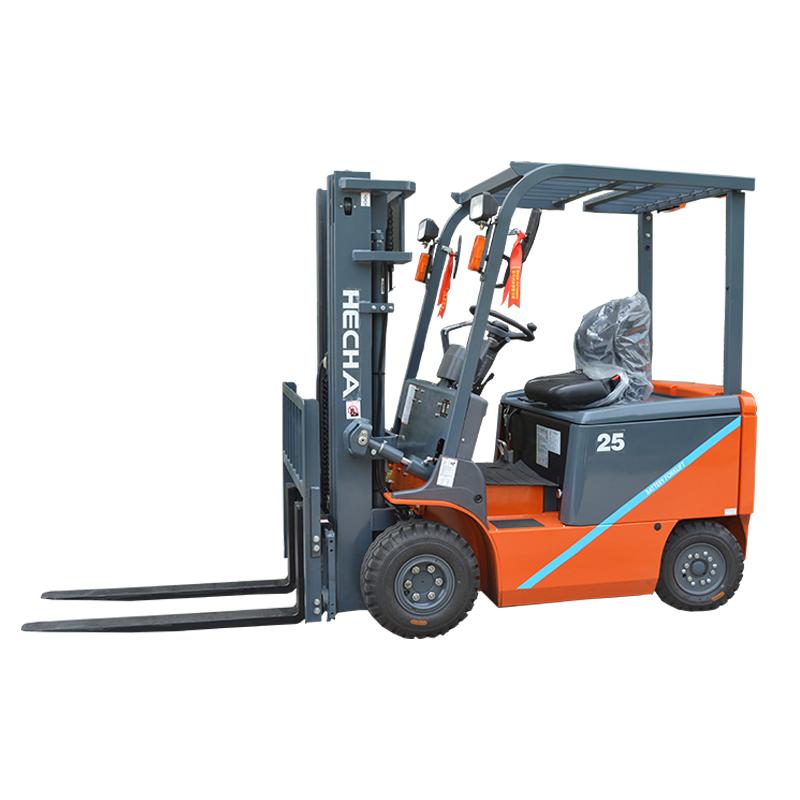 2-3.5 Ton Lithium Electric Forklift with Fast ChargingPowered by lithium-ion batteries, this forklift offers zero emissions and quick charging, making it ideal for multi-shift operations and efficient material handling on smooth warehouse floors.View Product →
Terrain and Environment: Indoor vs Outdoor Use
Three wheel forklifts are designed for smooth, level concrete. On a polished floor in a distribution center, they are a pleasure to drive. However, they struggle on cracked asphalt, gravel, expansion joints, and dock plates. The single rear wheel can lose traction or pitch unexpectedly. For these surfaces, a 4 wheel forklift with wider tires and a solid rear axle provides better foot grip and ride comfort.
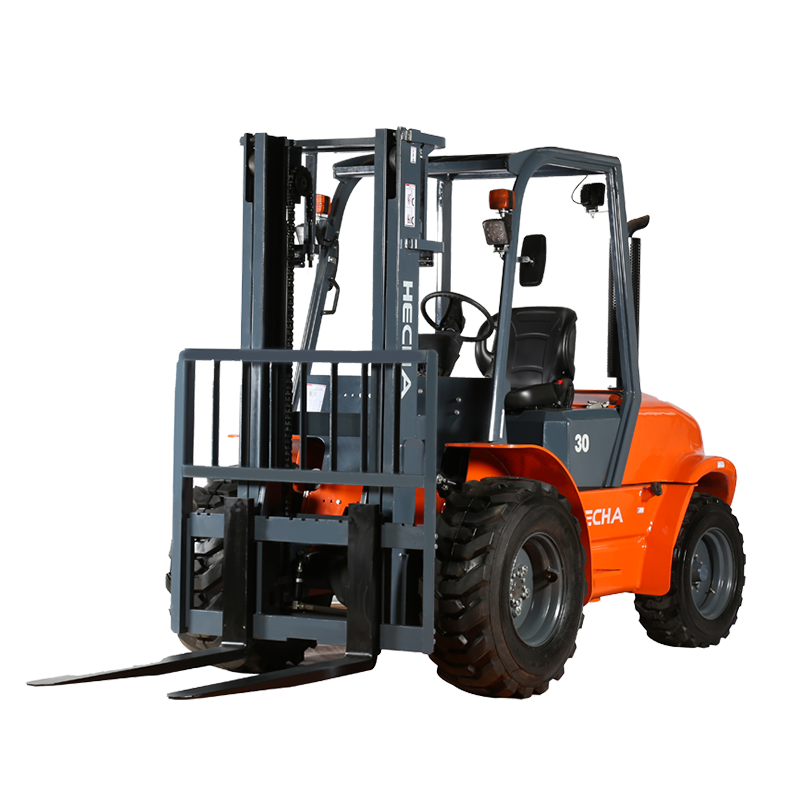
If your work crosses between indoor blocks and outdoor yard areas, a 4 wheel configuration is the safer default. If you occasionally need to cross uneven ground, a dedicated rough terrain fork truck is a better matched vehicle. The important rule is to match the truck to the surface, not just the load. When you want to compare all available configurations, browse the complete electric forklift lineup from Hecha.
Quick Comparison Table
| Feature | 3 Wheel Forklift | 4 Wheel Forklift |
|---|---|---|
| Turning Radius | Smaller, pivots quickly | Larger, requires wider clearance |
| Aisle Width | Narrower aisles possible | Needs wider aisles |
| Load Capacity | Typically up to 2.5 tons | Often 2 to 5 tons or higher |
| Stability | Good on level floors | More stable at height |
| Energy Efficiency | Lower rolling resistance | Higher consumption |
| Terrain Suitability | Indoor, smooth surfaces | Indoor and uneven surfaces |
| Best For | Narrow aisles, light loads | Heavy loads, mixed terrain |
How to Choose: A Practical Checklist
Use this checklist before you buy or rent a forklift. It will save you money and prevent downtime.
- Measure your aisle width. Write down the narrowest aisle in your warehouse. If it is under the manufacturer's minimum for a 4 wheel model, your only practical choice is a 3 wheel unit.
- Calculate your maximum load weight. Include the pallet, product, and any attachments. If it exceeds 2.5 tons, a 4 wheel forklift is safer.
- Inspect your floor condition. A flat, sealed concrete floor can handle a 3 wheel forklift. For expansion joints, steel plates, or outdoor sections, plan on a 4 wheel machine.
- Think about lift height and frequency. Higher lifts and more shifts per day mean stability and energy consumption become bigger factors. Choose the 4 wheel layout for higher duty cycles.
- Check battery and charging options. Lithium batteries can get you through two shifts with opportunity charging. Compare the upfront expense against your real operating schedule.
Frequently Asked Questions
Q1: Can a 3 wheel forklift be used outdoors?
It can, but only on smooth, level surfaces. If the outdoor area has rough gravel, dirt, or steep ramps, use a 4 wheel forklift or a rough terrain model. Otherwise, you risk losing traction and stability.
Q2: Which forklift lasts longer, 3 wheel or 4 wheel?
Longevity depends more on maintenance, operating environment, and battery type than on wheel count. In a clean warehouse with a lithium battery, a 3 wheel unit can last many years. In heavier conditions, the 4 wheel design tends to wear more slowly because it distributes stress across four wheels.
Q3: Are 3 wheel forklifts cheaper to operate?
Usually, yes. They consume less energy and are cheaper to purchase than a comparable 4 wheel model. However, the difference becomes irrelevant if you cannot fit them in your aisles or carry your loads safely.