English
 中文简体
中文简体 русский
 Français
 Español

Picture an operator driving across a warehouse floor with a pallet lifted four feet in the air. A sudden turn, a slight bump, and the load starts to drift. That is a preventable accident. The first rule of forklift load handling is simple: keep the forks low. How low? The recommended height is 4 to 6 inches (10 to 15 cm) from the ground. This height applies to almost every travel situation, from a smooth dock to a gravel yard.
At Hecha Intelligent Equipment, we build forklifts that help operators work safely. This guide explains the exact height, why it matters, and what to change on ramps or when stacking.
The Simple Answer: 4 to 6 Inches Off the Ground
Keep the bottom of the forks 4 to 6 inches above the floor when the lift truck is moving. This is the "travel height" or "carrying height." It is not a clearing height for stacking; that is different. The travel height keeps the load's center of gravity low and improves your view of the path ahead.
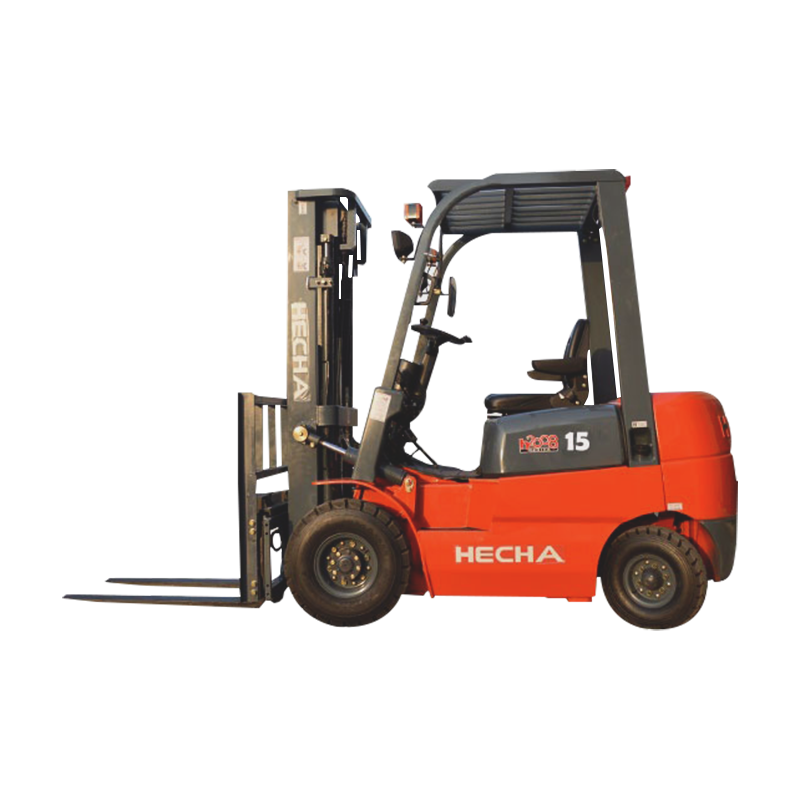
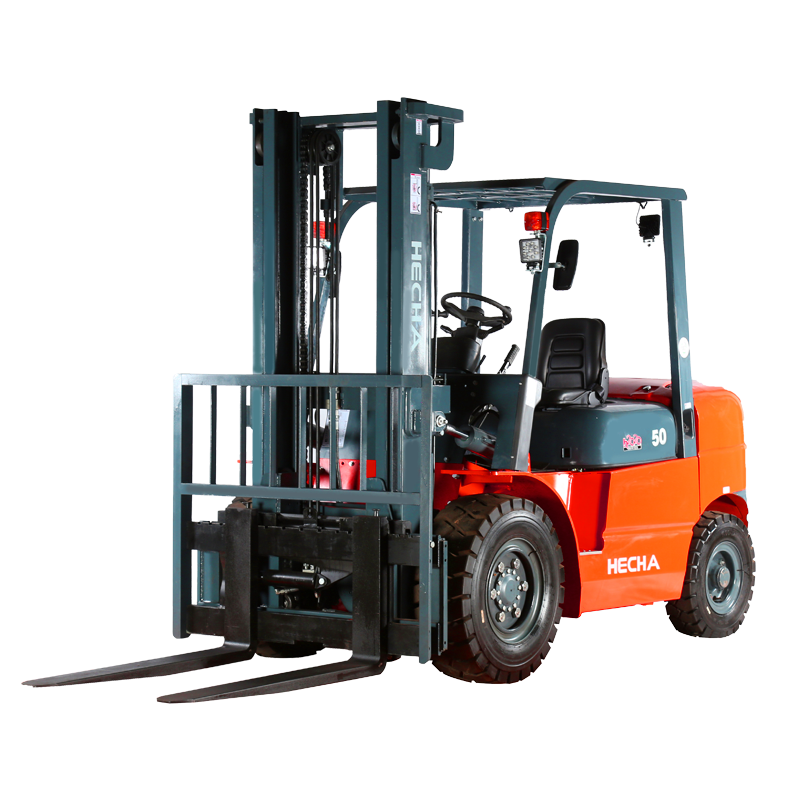
Carrying the load too high is the most common reason forklifts tip forward or sideways. Carrying it too low can scrape the floor or cause damage on uneven surfaces. The 4 to 6 inch window gives you both stability and clearance. Hecha 2.0–3.8 ton diesel forklift is designed with a low center of gravity and a wide stance to support this safe carrying height even at full load.
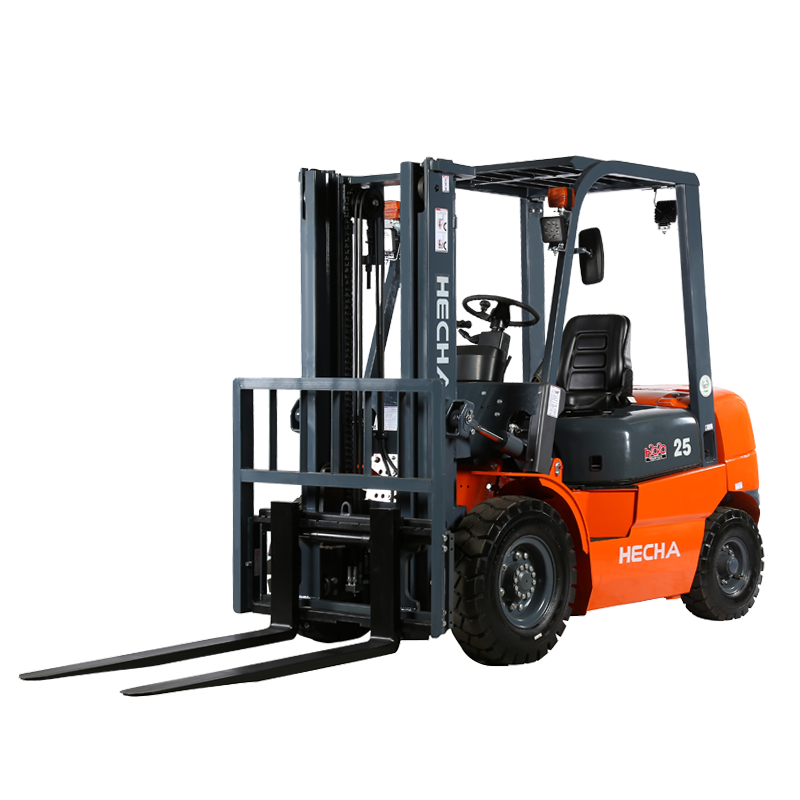 Hecha 2.0-3.8 Ton Diesel Forklift with Low Center of GravityThis diesel forklift features a low center of gravity and wide stance, supporting the recommended 4-6 inch load height for stability and clearance even at full capacity.View Product →
Why Carrying Height Matters
"Carry the load as low as possible" is the golden rule taught in every forklift safety course. The 4 to 6 inch range is a practical interpretation of that principle.
Stability Under the Load
When the load is low, the combined center of gravity of the forklift and the load stays closer to the ground. If you raise the load, the center of gravity moves upward. That makes the lift truck more likely to tip when you turn, brake, or drive over a bump. OSHA and other safety bodies stress that a low load reduces the tipping moment.
Visibility and Obstacle Clearance
A low load gives you a clear view over and around the load. You can see pedestrians, racking legs, and floor hazards. If the load blocks your view, you should drive in reverse. But starting with the load low gives you the best chance to see what is ahead.
Fork Wear and Longevity
The forks are designed for lifting, not for striking the ground. Carrying the load at a consistent 4 to 6 inch height reduces the impact of traveling over floor joints, bumps, and transitions. The tips of the forks stay away from concrete, so you get longer fork life and less chance of jolting the load.
Load Capacity and the 24-Inch Load Center
What Is Load Capacity?
Load capacity is the maximum weight a forklift can lift at a specific load center. For most counterbalance forklifts, the reference load center is 24 inches from the face of the forks. This dimension is marked on the data plate.
How Load Center Affects Safe Height
If the load's center of gravity is farther than 24 inches, the effective capacity drops. A large pallet or a load with uneven weight distribution may make the forklift unstable even if the forks are only 4 inches above the floor. Always read the data plate and do not exceed the rated capacity.
When you carry a load at the correct height, the forks are in a stable horizontal position. Tilting the mast backward is normal for traveling, but tilting forward while moving can lift the forks and reduce stability.
| Scenario | Recommended Fork Height | Why |
|---|---|---|
| Traveling on level surfaces | 4–6 inches (10–15 cm) | Keeps the load stable and visible |
| Traveling on ramps | 4–6 inches, going straight up or down | Avoids tipping on the incline |
| Picking up a pallet | Forks just under the pallet, tilting back | Seats the load against the backrest |
| Stacking or high tiering | Raise only after reaching the racking location | Reduces the risk of losing control in motion |
Safe Load Handling: Preparation, Lifting, Traveling, and Lowering
Preparing the Load
Before lifting, inspect the pallet and the load. Make sure it is stable, centered, and not damaged. Use a load backrest if the forklift has one. A backrest helps keep parts of the load from falling backward.
Lifting the Load
Approach the load with the forks level. Insert the forks as far as possible, then lift just enough to clear the floor. Tilt the mast back slightly to seat the load against the backrest. Then raise the forks to 4 to 6 inches.
Traveling with the Load
Drive forward whenever the load does not block your view. If you cannot see, drive in reverse. Keep the mast tilted back. Avoid starting and stopping suddenly. Turn slowly, especially on wet or uneven surfaces.
Lowering the Load
Stop at the destination. Lower the load so the forks are level and the pallet can rest on the ground or rack beams. Do not rely on the brakes to stop a moving load.
For indoor environments where noise and emissions matter, an electric forklift is a reliable choice. The Hecha 2–3.5 ton lithium forklift offers precise mast control, making gentle lifting and lowering easier in tight spaces.
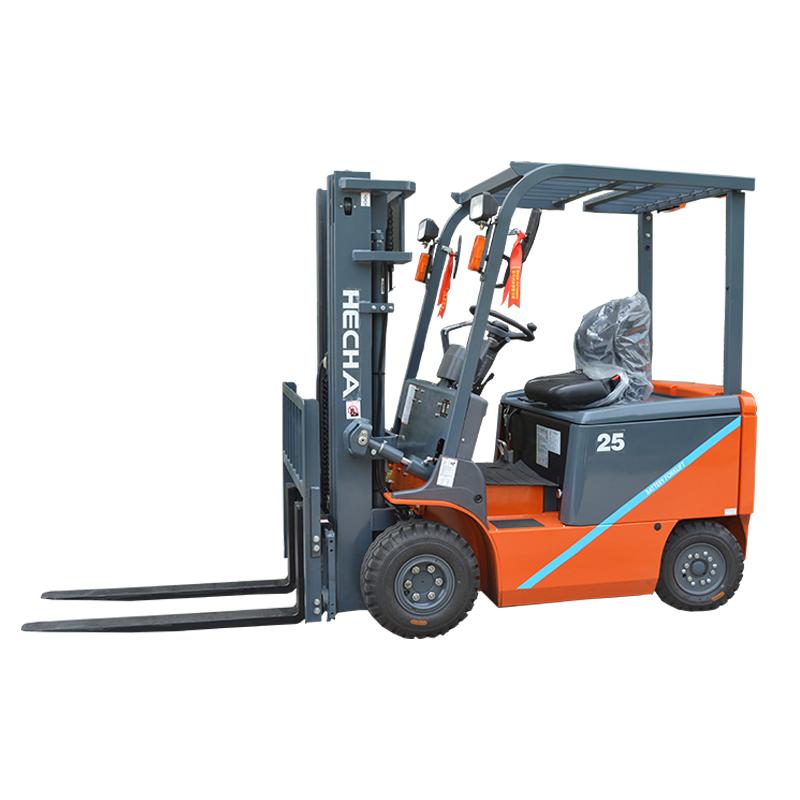 Hecha 2-3.5 Ton Lithium Electric Forklift for Precise Mast ControlIdeal for indoor use, this electric forklift provides zero emissions, low noise, and precise mast control, making it suitable for gentle lifting in tight spaces.View Product →
Ramps and Special Conditions
Driving on Ramps
The 4 to 6 inch rule still applies on ramps, but the way you travel is different. When going up a ramp, drive forward with the load pointing uphill. When coming down, drive in reverse with the load pointing uphill. This keeps the load on the uphill side and reduces the chance of tipping forward.
Do not turn on a ramp, and do not change the load height while on the incline. If you must stop, lower the load to the floor if possible.
Load Height in Tight Aisles
In narrow aisles, a low load is not just a safety rule; it lets you see racking beams and align your approach. For a high racking application, a reach truck gives you a longer reach without raising the load too high during travel. The Hecha RT16-20 reach truck Pro is built for narrow aisle stacking with a travel height that keeps the load stable.
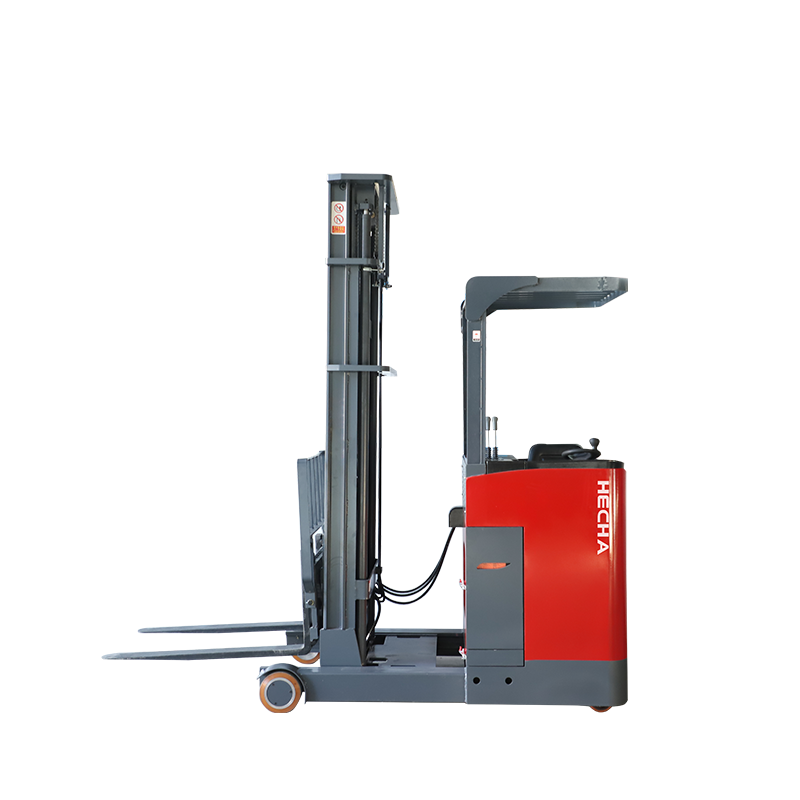 Hecha RT16-20 Reach Truck Pro for Narrow Aisle StackingThis reach truck is designed for narrow aisles, offering extended reach and stable travel height to keep loads safe during high racking operations.View Product →
Frequently Asked Questions
Q1: How high should a load be carried on a forklift?
Carry the load 4 to 6 inches (10–15 cm) off the ground. This is the safest travel height for most floor conditions.
Q2: Is 4 to 6 inches an OSHA requirement?
OSHA does not specify a single universal number, but its training materials and eTool describe carrying loads as low as possible. The 4 to 6 inch range is the widely accepted industry recommendation.
Q3: Should the mast tilt forward or backward while traveling?
Tilt the mast backward to seat the load against the backrest. Only tilt forward when picking up or placing a load, and do not travel with the mast tilted forward.
Q4: What should you do if the load is too high?
Lower the forks to 4 to 6 inches immediately. Stop the forklift if the load starts to shift. Re-centre the load before moving again.
Conclusion
The answer to "how high should a load be carried on a forklift" is not a trivial detail. The 4 to 6 inch carrying height protects you, your co-workers, and the load. It reduces tip-over risk, improves visibility, and reduces fork wear. Always check the load capacity, prepare the load properly, and remember the ramp rules.
Hecha Intelligent Equipment manufactures a full range of diesel forklifts and electric forklifts that support safe carrying heights and help operators work with confidence. For more about choosing the right truck, read our article on differences between electric and diesel forklifts.