English
 中文简体
中文简体 русский
 Français
 Español

A yard manager in Johor Bahru runs four 3.5 ton trucks across two shifts a day, lifting 2 ton concrete moulds on a yard that floods ankle-deep in monsoon season. His question was simple: replace two tired diesel units with electric models, or buy diesel again? Diesel stayed. Not because it is cleaner or quieter, but because low-end torque, five-minute refuelling and predictable hourly cost still added up on that specific site.
That is the honest shape of the diesel forklift advantages and disadvantages debate. It is a trade-off rather than a verdict, and it usually resolves itself once you know your duty cycle, your ground conditions and your local emission rules.
Conclusion first: diesel leads on low-speed torque, refuelling speed, rough-ground tolerance and cost per hour in high-utilisation outdoor work. It loses on emissions, indoor suitability, noise, service scope and exposure to fuel prices. Under roughly 1,000 hours a year indoors, it is usually the wrong buy.
Diesel Forklift Advantages You Can Measure
Diesel has held the heavy outdoor segment for decades for mechanical reasons, not habit. These five advantages show up in daily operation.
1. Torque that holds up at low engine speed
A diesel engine reaches peak torque around 1,500 to 2,000 rpm and holds it across a wide band, so a loaded 3.5 ton truck pulls away on a 15 to 20 percent ramp without the hesitation you feel when a battery pack is down to a quarter charge. Electric motors are strong off the line, but usable performance narrows as the battery depletes and continuous heavy lifting heats the motor and controller. That difference is why diesel units still dominate construction, timber and port work. A fuller technical comparison sits in this breakdown of diesel performance on torque, terrain and grade.
2. Refuelling in minutes instead of charging for hours
A 60 to 90 litre tank refills in under five minutes, so the truck is ready for the next shift without planning. A lithium-ion equivalent needs one and a half to two and a half hours for a full charge, or a spare battery and a swap station. Across two or three shifts, the diesel pattern stays simple: top up at shift change, no charger bay, no electrical upgrade, no battery rotation schedule.
3. Lower purchase price, and a cost per hour that improves with use
An equivalent-capacity lithium-ion truck costs considerably more upfront, and that gap is usually financed across five years. At 2,000 or more operating hours a year, the lower capital cost of a diesel truck still carries weight even after fuel is counted. At 800 hours a year in a clean warehouse the maths flips completely: electricity is cheaper per hour than diesel, and there is far less to service.
4. It works where there is no grid connection
Construction sites, farms, quarries, timber yards, temporary depots and port aprons rarely have a charging bay. A diesel truck needs a fuel drum and a funnel. An electric truck needs infrastructure that may not exist until the project is already finished, which makes diesel the only practical choice for contractors who move between sites.
5. A rugged powertrain with genuine resale value
Diesel drivetrains tolerate dust, vibration, humidity and temperature swings, and every regional service network understands them. Parts are widely available and independent mechanics can work on them. A well-maintained diesel forklift with service records keeps meaningful resale value, which lowers the real cost of ownership compared with a machine that is hard to trade in.
Diesel Forklift Disadvantages That Show Up Later
The same fuel that makes diesel dependable outdoors is what disqualifies it elsewhere. These are the constraints to price before you sign a purchase order.
Emissions and indoor restrictions
Diesel exhaust contains carbon monoxide, nitrogen oxides and particulate matter, so these trucks are generally not permitted inside enclosed warehouses, cold stores, food plants or pharmaceutical facilities unless forced ventilation and monitoring are in place. Emission stage matters too: Stage V and Tier 4 Final engines use particulate filters and SCR systems with AdBlue, which adds purchase cost, a consumable, and a duty-cycle requirement. A filter needs exhaust temperature to regenerate, so trucks doing short cycles that never warm up properly are the ones that clog and de-rate.
Noise, vibration and operator fatigue
A diesel truck typically produces 80 to 90 dB(A) at the operator position, against roughly 65 to 70 dB(A) for an electric unit. Over eight hours that difference becomes fatigue, and it triggers hearing protection rules, night-work limits near housing and complaints on shared sites. Vibration is the quieter cost: it accelerates wear on the operator, the mast and the attachments.
More service items and more ways to lose a shift
Oil, oil filters, fuel filters, coolant, belts, injectors, turbocharger, aftertreatment and filter cleaning all sit on the schedule, usually every 250 to 500 engine hours. An electric truck's list is far shorter: battery, brakes, hydraulics, tyres. An engine rebuild at 8,000 to 12,000 hours is predictable, but it is a capital event rather than a small invoice, and an unplanned fuel-system fault stops the machine completely.
Fuel price exposure and storage obligations
A fleet burning 3 to 4 litres per hour cannot absorb a sharp price rise without passing it on. On-site storage also brings rules: bunded tanks, spill kits, fire separation and enough security to prevent theft. None of that appears on a quotation sheet, but it lands in the operating budget.
Where diesel is simply the wrong answer
Indoor 3PL warehouses, cold storage, beverage plants, cleanrooms and any operation under roughly 1,000 hours a year are better served by lithium-ion or lead-acid electric trucks. Buying diesel for those environments creates ventilation problems, noise complaints and maintenance cycles the duty profile cannot support.
Diesel, Lithium-Ion Electric and LPG Side by Side
Use the table as a filter, then verify local emission rules, ventilation and fuel storage requirements before finalising a power type.
| Factor | Diesel | Lithium-ion electric | LPG |
|---|---|---|---|
| Indoor use | Not permitted without ventilation | Suited to indoor work | Possible with ventilation |
| Energy turnaround | Under 5 minutes | 1.5 to 2.5 hours or battery swap | Cylinder change in minutes |
| Low-speed torque | Strong and constant | Strong, declines with charge | Good, slightly below diesel |
| Noise at operator ear | 80 to 90 dB(A) | 65 to 70 dB(A) | 75 to 85 dB(A) |
| Service scope | Engine, filters, aftertreatment | Battery, brakes, hydraulics | Engine plus cylinder handling |
| Best fit | Outdoor, heavy, multi-shift | Indoor, clean, medium duty | Mixed indoor and outdoor |
Matching Diesel Capacity to the Job: 1.5 to 10 Tons
Most diesel purchase mistakes are capacity mistakes. Oversizing costs fuel, turning radius and tyre life; undersizing costs you a second lift and stresses the mast.
In the 1.5 to 5 ton band, a 2.0 to 3.8 ton truck covers general yard work, loading bays and container stuffing with lower fuel burn than anything larger. Remember that ratings assume a 500 mm load centre, so a wide load at 1,200 mm reduces usable capacity quickly.
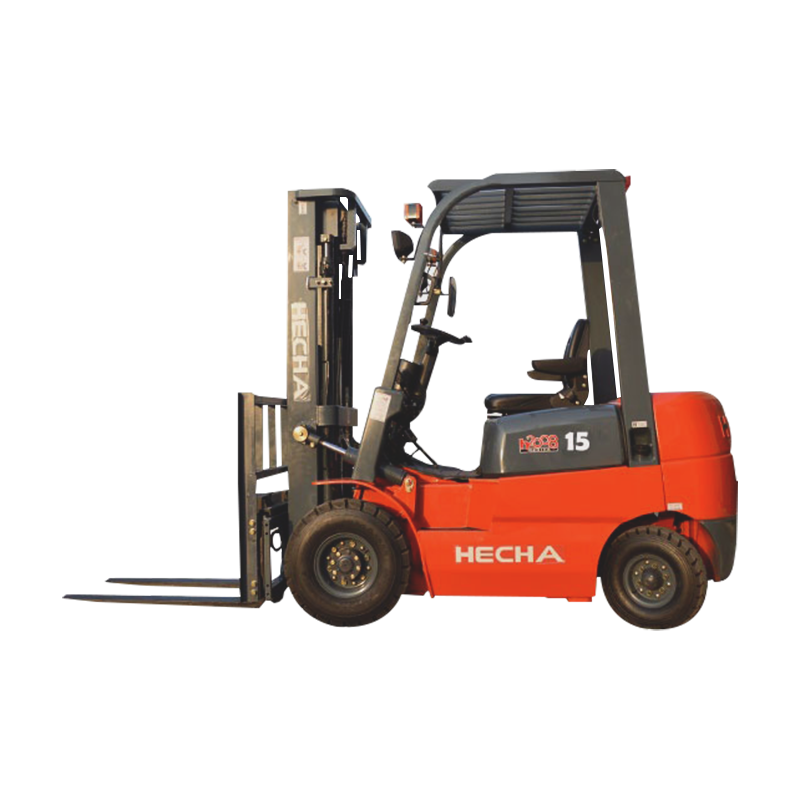
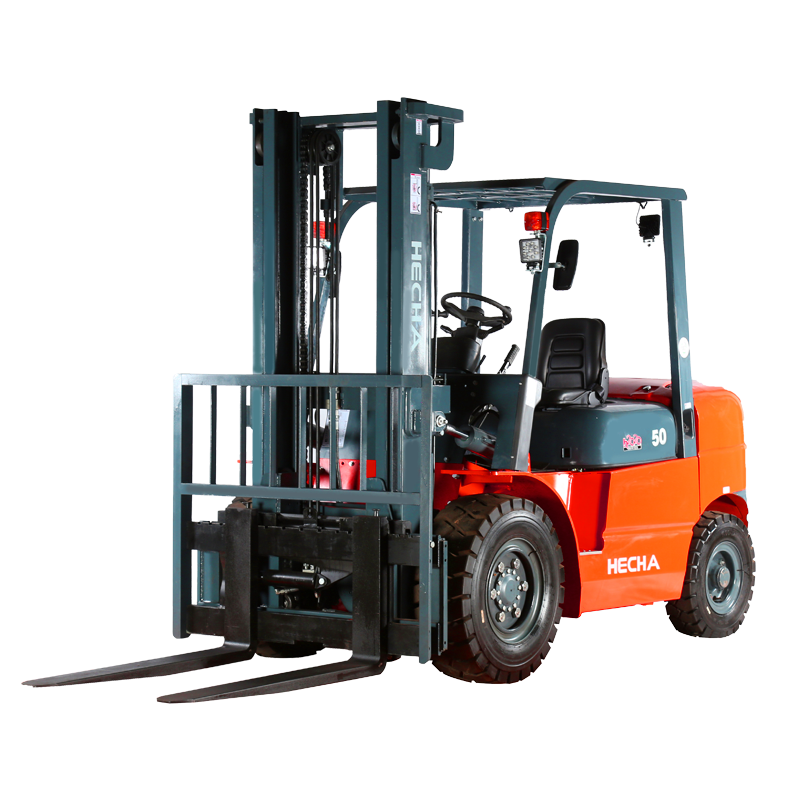
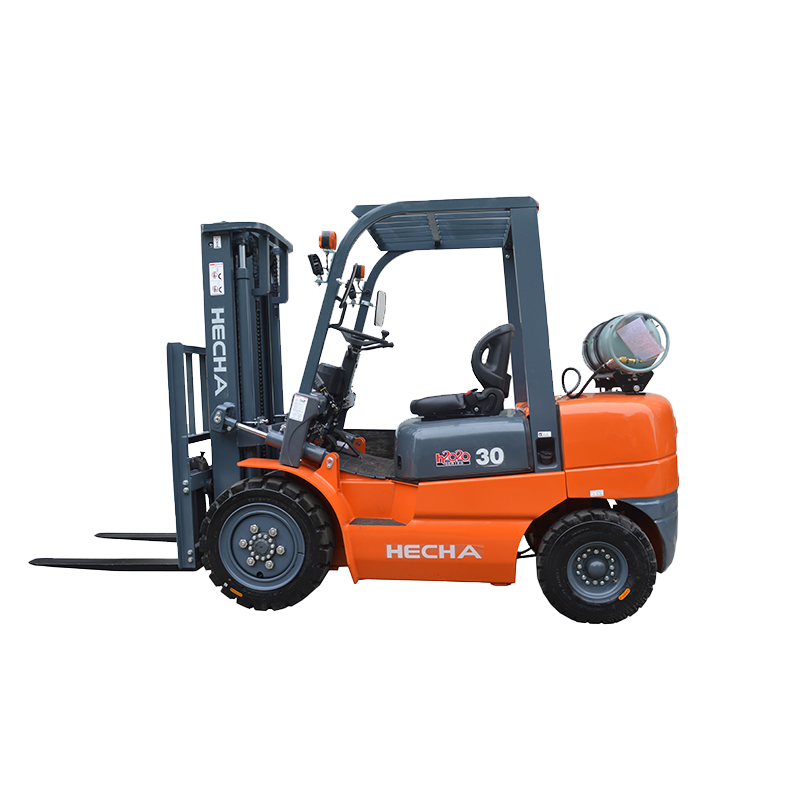
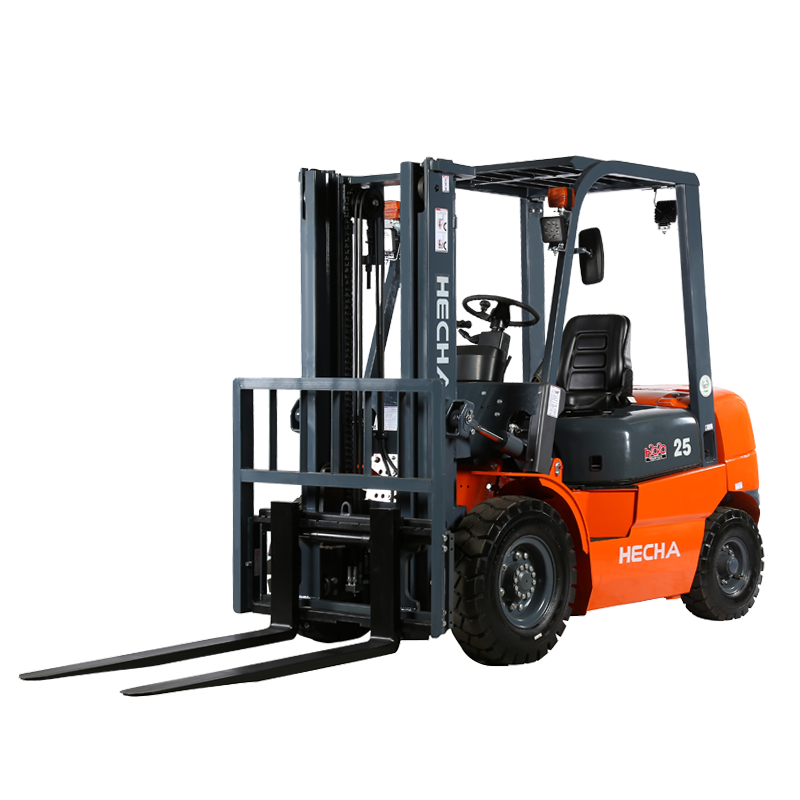 2.0-3.8 Ton H Series Diesel ForkliftThis H series diesel counterbalance forklift covers 2.0-3.8 ton models for yard work, loading bays and container stuffing, with 500 mm load centre.View Product →
Above that, 5 to 10 ton heavy-duty trucks move steel coils, concrete products, timber packs and containers, and typically burn 4 to 8 litres an hour. On these machines, brake capacity, mast strength and tyre compound matter as much as engine power.
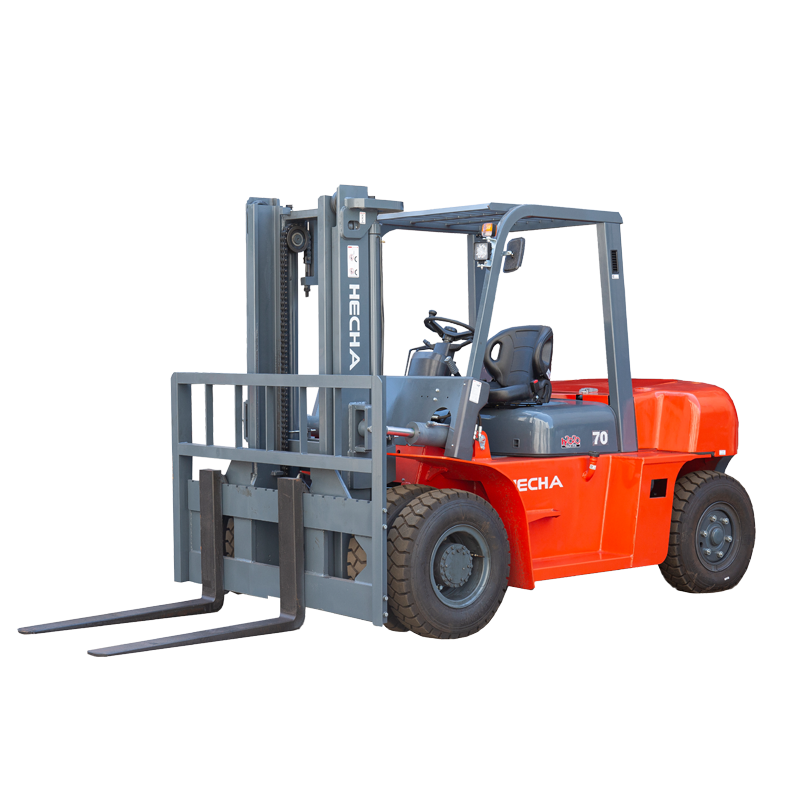
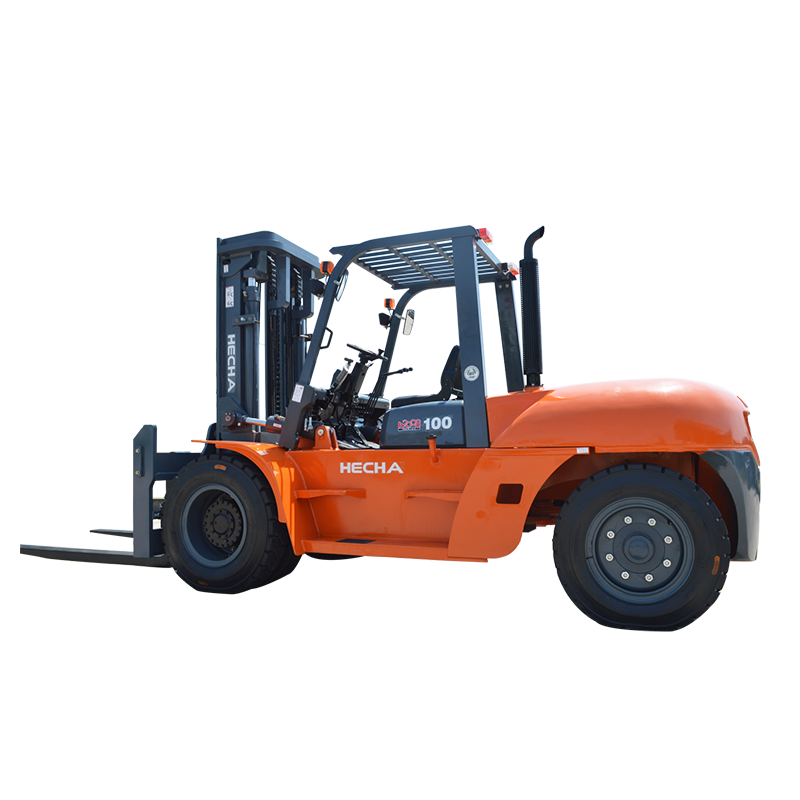 8–10 Ton Heavy-Duty Diesel Counterbalance ForkliftHeavy-duty diesel forklift for steel coils, concrete products, timber packs and containers, with capacities from 5,000 to 12,000 kg and 600 mm load centre.View Product →
If the ground is unpaved, muddy or sloped, a standard counterbalance truck will struggle. Two-wheel drive and four-wheel drive rough terrain models use larger tyres, higher ground clearance and sealed components to keep working where a warehouse truck would sink.
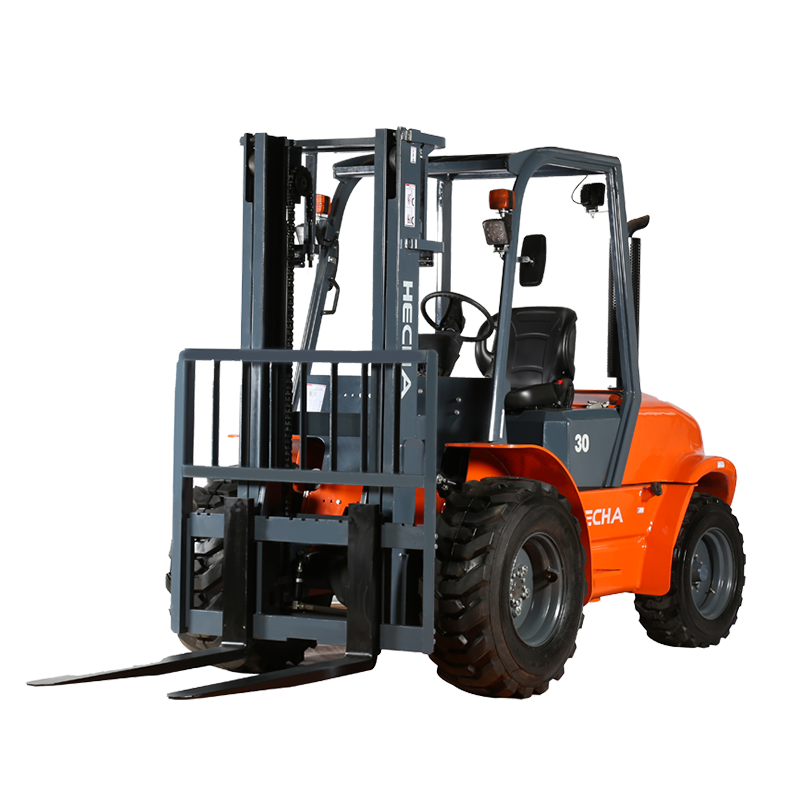 2WD Rough Terrain Diesel Forklift for Uneven SitesRough-terrain diesel forklift with 2,500–3,500 kg capacities, high ground clearance and wide-view mast for outdoor yards, muddy fields and rocky landscapes.View Product →
Outdoor yardsMulti-shift dutyUnpaved groundHeavy attachments
A Practical Buying Checklist
Work through these six points before you request quotes, because each one changes the specification you should be pricing.
- Log the real duty cycle: lifts per shift, average load weight, lift height, ramp gradients and hours per year. Anything under 1,000 hours points away from diesel.
- Confirm the emission stage required in your market and whether a particulate filter will suit your duty cycle.
- Survey the ground: paved, gravel or mud decides between standard pneumatic tyres and a rough terrain chassis.
- Plan fuel storage, including bunded tanks, spill kits, ventilation and security.
- Check service coverage: how far is the nearest dealer with engine and aftertreatment parts?
- Price the whole package, including attachments, sideshift, extra mast height, tyres, delivery and warranty terms.
Frequently Asked Questions
Q1: Are diesel forklifts cheaper to run than electric ones?
It depends on utilisation. Above roughly 2,000 hours a year, the lower purchase price of a diesel truck often outweighs its higher energy and service cost. Below 1,000 hours, especially indoors, electricity is usually cheaper per hour once maintenance is included.
Q2: Can a diesel forklift be used indoors?
Only with engineered ventilation and, in many jurisdictions, gas monitoring. Carbon monoxide accumulates quickly in enclosed spaces, and most workplace safety rules treat diesel indoor operation as a controlled activity rather than a default one.
Q3: How long does a diesel forklift last?
With disciplined maintenance, 10,000 to 15,000 operating hours is realistic, with an engine rebuild typically planned between 8,000 and 12,000 hours. Machines working in dust or on ramps wear faster than those on flat concrete.
Q4: Do I need AdBlue with a modern diesel forklift?
If the engine meets Stage V or Tier 4 Final, it almost certainly uses SCR with AdBlue, plus a particulate filter. Budget for the consumable and for regeneration-friendly duty cycles, not just the purchase price.
Read the diesel forklift advantages and disadvantages as a duty-cycle question rather than a technology argument. Heavy loads, rough ground, multi-shift outdoor work and sites without power infrastructure still favour diesel. Indoor, light-duty and low-hour operations favour electric, and LPG sits between them for mixed sites.
Get the capacity, emission stage and service plan right at the quotation stage, and the power type almost selects itself. If you want to see how these trucks are built before you shortlist, the manufacturer profile and factory details are a useful starting point.