English
 中文简体
 русский
 Français
 Español
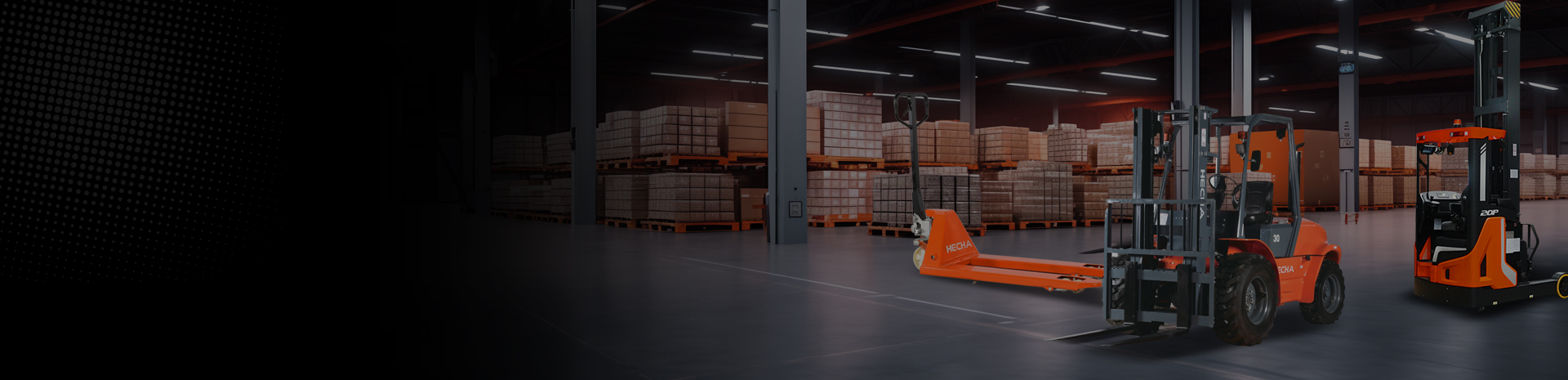

A yard supervisor unloading 35 kg fertilizer bags from a flatbed into a storage shed does not need a 5-ton forklift. He needs a machine compact enough to move between stacked pallets, stable enough on packed gravel, and cheap enough to run for long hours without a charging station. A 1.5 ton diesel forklift is that machine. It suits operations where loads are light but the environment is tough, and where downtime for battery charging would interrupt a busy shift.
What Does "1.5 Ton Diesel Forklift" Actually Mean?
The rated capacity of 1.5 tons refers to the load a forklift can safely lift at a specific load center, normally 500 mm. The figure is not a marketing number. Exceeding it, especially with an attachment or an off-center load, reduces stability and can lift the rear wheels off the ground. At this capacity, the machine sits between compact 1.0-1.2 ton units and general-purpose 2.0-3.8 ton trucks, so it is often chosen for a particular niche: loads below 1,500 kg, outdoor yards, and continuous operation.
| Capacity Class | Typical Loads | Best Environment |
|---|---|---|
| 1.0-1.2 tons | Cartons, small bins, light spools | Narrow aisles, van loading |
| 1.5 tons | Bags, bricks, stillages, small molds | Outdoor yards, loading docks, factories |
| 2.0-2.5 tons | Large pallets, machine parts, drums | General warehouses, heavier docks |
In daily use, the 1.5 ton class is often specified for operations that move between a stack and a truck, rather than for high-volume warehouse put-away. The operator benefits from a lower step-in than a 2.5 ton truck, a clear view to the forks, and a counterweight that is small enough not to block passage in tight storage rows. That is why the capacity is popular in sites where the forklift shares space with people and manual pallet trucks.
Common Applications of a 1.5 Ton Diesel Forklift
A 1.5 ton diesel forklift appears wherever three conditions overlap: loads are within heavy pallet range, floors or yards are not perfectly smooth, and a shift needs continuous operation. The following applications show why it remains a practical choice in many sectors.
Agricultural Supply and Feed Yards
Feed, fertilizer, seed, and bagged additives are dense. A pallet of 25 kg bags can reach 500-700 kg, which an electric pallet truck can usually move on a flat concrete floor. But in a feed store or farm supply yard, the ground is often compacted soil or gravel. Pneumatic tires, high torque, and a raised chassis help the 1.5 ton diesel forklift cross rough surfaces without getting stuck. It also refuels in minutes, allowing the operator to handle several deliveries per day.
Building Material Yards
Cement bags, bricks, roof tiles, blocks, and steel fittings are typical products in a builders merchant yard. These materials are stored outside, moved repeatedly, and often loaded onto flatbed trucks or trailers. A 1.5 ton diesel forklift can lift one pallet of cement bags or a bundle of roof tiles, then travel across the yard to the loading area. The diesel engine provides the low-end torque needed for ramps and uneven surfaces.
Manufacturing and Small Fabrication Shops
Not every factory needs a 3-ton forklift. A metal fabrication shop may move stillages of components, palletized raw material, and finished parts. These loads are often below 1.5 tons. The benefit of diesel in this setting is endurance: a machine can run all day without waiting for a battery change. If the shop has a loading dock and an outside storage area, the same machine can serve both zones.
Wholesale Distribution and Truck Loading
Wholesalers who stack pallets in a covered yard or load delivery vans need a compact forklift with good visibility. A 1.5 ton diesel forklift fits into truck bodies and storage areas that are too tight for larger models. Its short wheelbase improves turning in small yards, while the diesel engine gives reliable performance even when the truck is parked on a slope.
Municipal and Maintenance Depots
Public works yards and maintenance depots handle piping, road signs, aggregate sacks, and repaired equipment. A 1.5 ton diesel forklift can move these items around an open yard and load service vehicles. Because these sites do not always have covered charging areas, diesel is often simpler for the depot manager and the operator.
Diesel, Electric, or LPG in the 1.5 Ton Class?
At 1.5 tons, a diesel forklift competes with electric forklifts and LPG models. Diesel is not always the best answer. The choice depends on torque, running time, fuel availability, and indoor air quality.
| Factor | Diesel Forklift | Electric Forklift | LPG Forklift |
|---|---|---|---|
| Low-speed torque | High, good for ramps and uneven ground | Moderate and better on flat floors | Moderate |
| Refueling or charging | Refuel in minutes | Battery charging or swapping takes longer | Refill tank in minutes |
| Indoor use | Needs ventilation | Clean and quiet | Acceptable with ventilation |
| Maintenance | Engine oil, filters, cooling | Battery care, less engine maintenance | Engine plus fuel system |
If most of your loads stay on flat, sealed floors and the building is enclosed, an electric forklift usually deserves a closer look. If the work is outside, includes ramps, or cannot be interrupted for charging, a diesel model is often the more practical route. For a deeper comparison of operating conditions, you can see how diesel forklifts outperform electric models on torque, terrain, and endurance.
Key Buying Considerations for a 1.5 Ton Diesel Forklift
Before buying, check four things: mast height, tire type, attachments, and outdoor exposure. A small diesel forklift is not just a scaled-down 3-ton truck. The smaller counterweight means attachments and off-center loads affect stability more quickly.
Do not assume that a 1.5 ton unit can handle every pallet weighing 1.5 tons. Check the data plate with the chosen mast, fork length, and attachment; the real safe capacity may be lower.
- Mast height: Choose a mast that gives you the required lifting height while still clearing doorways, containers, and low canopies in closed position.
- Tire type: Pneumatic tires with a deeper tread suit gravel, mud, and rough concrete; cushion tires are better for smooth hardstand areas but less common in this diesel class.
- Attachments: Side shift, fork positioners, and different fork lengths change the load center and reduce capacity. Budget for that reduction when matching the truck to the load.
- Exposure: If the truck sits outside overnight, look for a weather-resistant canopy, battery and engine protection, and easy access to service points for winter checks.
Before you sign for a new machine, run a test with the actual pallets and attachments. Lift the heaviest load to the maximum height, travel across the worst surface, and check how the forklift behaves on a ramp. A test reveals whether the mast height, tire pressure, and counterweight are matched to your site.
How to Match a 1.5 Ton Diesel Forklift to Your Application
Start with the heaviest routine load, not the heaviest load you can imagine moving once. Then define the working route: from a stack to a truck, across a yard, through a doorway, or up a ramp. A typical configuration for bagged material in a yard is a two-stage mast, side shift, and pneumatic tires. For loading delivery vehicles, a three-stage mast with a low closed height helps entry into the truck body.
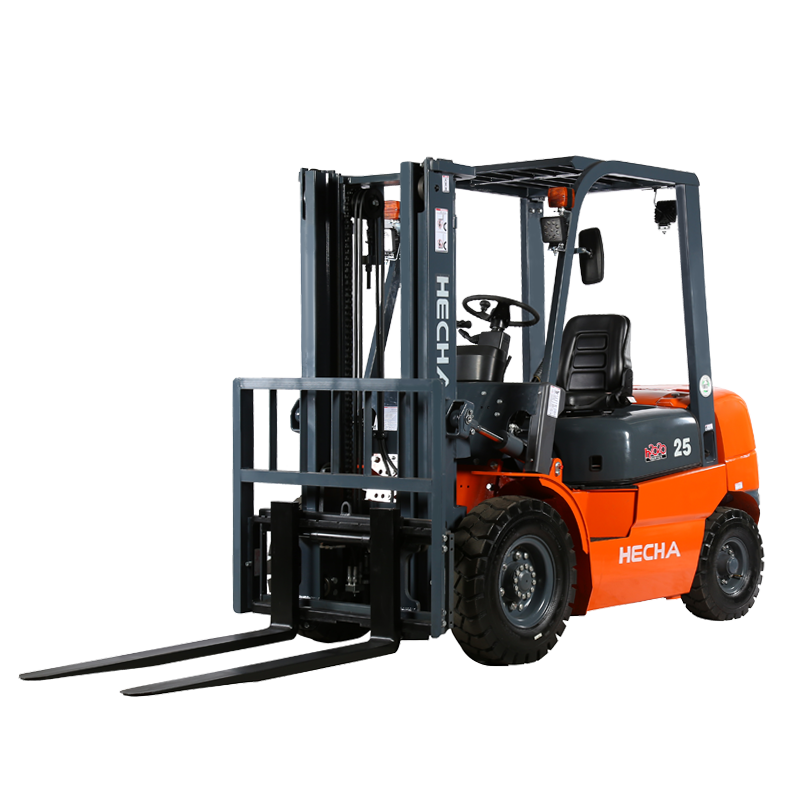
Because the machine is built around a 1.5-1.8 ton capacity range, manufacturers can offer different mast heights, fork lengths, and factory-installed attachments to match the site. Hecha Intelligent Equipment, for example, produces and assembles the entire machine in its own plant, so customizations are handled before delivery rather than by a third-party dealer after sale.
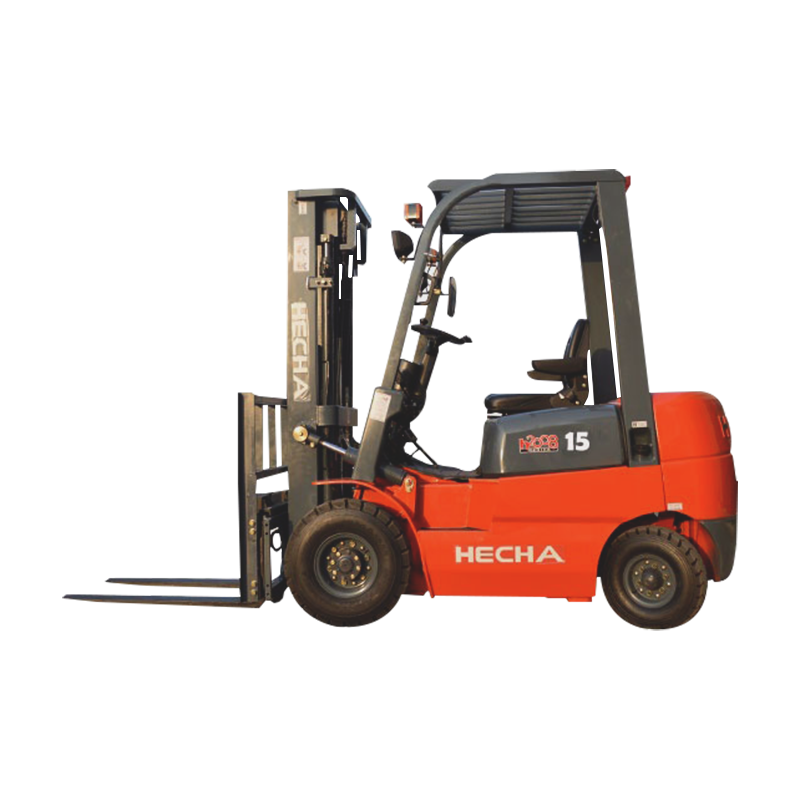 1.5-1.8 Ton Diesel Forklift with Customization OptionsThis diesel forklift suits applications needing moderate capacity. It offers factory-installed attachments and mast options, plus excellent visibility and ergonomic controls, making it worth reviewing for site-specific needs.View Product →
If your application sits within this size class, review the specifications of a 1.5-1.8 ton diesel forklift before comparing it with larger units. The right configuration can avoid paying for capacity you do not need or struggling with a machine that is slightly too small.
Final Advice for Buyers
A 1.5 ton diesel forklift is a practical tool for operations that handle modest loads outdoors or in semi-outdoor conditions. It earns its place when you need compact dimensions, high low-speed torque, and steady availability throughout the shift. But the machine is only as good as its specification: mast, tires, load center, and attachments must match the loads and the site.
Start by listing the pallet weights, maximum lifting heights, and surface conditions in your yard. Use that information to set a safe capacity limit, then choose a 1.5 ton diesel forklift configuration that fits. If the numbers are borderline, move up a size instead of overloading a smaller truck; if they are comfortable, the 1.5 ton class will save money and space compared with a larger model.