English
 中文简体
中文简体 русский
 Français
 Español

Understanding the Reach Truck: A Cornerstone of Modern Warehousing
In the fast-paced world of logistics and supply chain management, optimizing space and throughput is paramount. The Reach Truck has emerged as a critical tool for achieving these goals. Unlike standard counterbalance forklifts, a reach truck is a specialized piece of Warehouse Equipment designed to maximize vertical storage and minimize aisle widths. This article provides a comprehensive, technical exploration of what a reach truck is, how it operates, and the substantial efficiency gains it offers to modern distribution centers and warehouses.
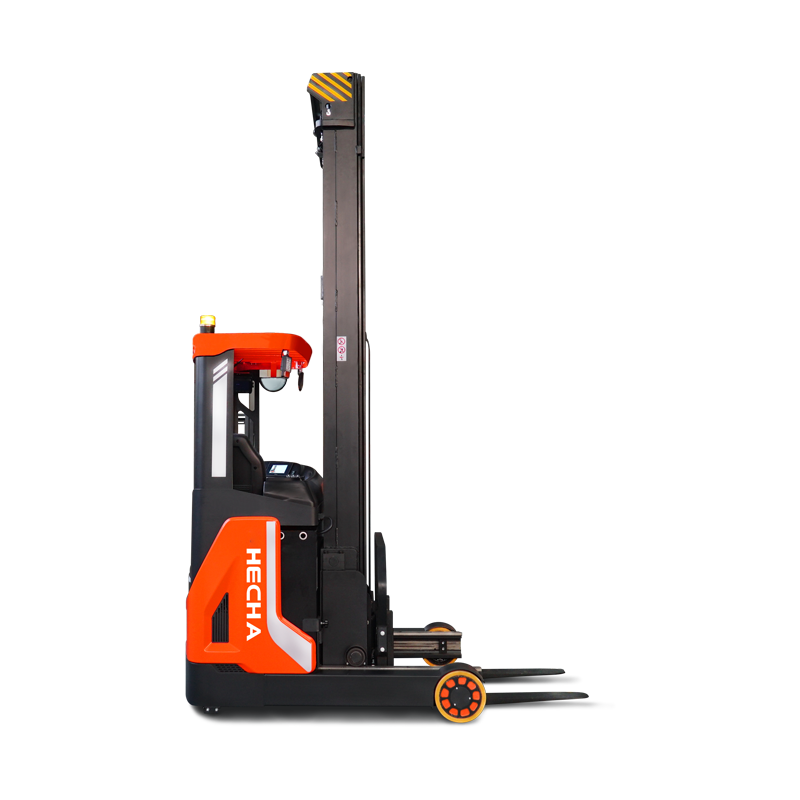
A reach truck is specifically engineered for narrow aisle warehouse solutions. Its defining characteristic is its ability to extend its forks forward to pick up or deposit a pallet, while the main body of the truck remains stationary in the aisle. This pantograph mechanism allows the truck to operate in aisles significantly narrower than those required by conventional forklifts, directly addressing the need for high-reach warehouse lift capabilities.
When considering reach truck vs forklift comparisons, the distinction becomes clear. A counterbalance forklift uses a heavy weight at the rear to offset the load at the front, requiring a wide turning radius. In contrast, a reach truck's design, with its stabilizing legs and extending forks, eliminates the need for a large counterweight, allowing for a more compact chassis and unparalleled maneuverability within tight spaces. This makes it an indispensable asset for warehouses aiming to increase storage density without expanding their physical footprint.
Mechanics of Efficiency: How Reach Trucks Work
The operational efficiency of a reach truck is rooted in its unique design and engineering. The core of the system is the pantograph mechanism. This scissor-like linkage allows the forks to extend forward to retrieve or place a pallet on racking. This is a crucial distinction from other narrow-aisle equipment like an orderpicker forklift or order picker machines, where the operator or forks move to the load, but not necessarily in the same way.
1. Pantograph Mechanism
Extends the forks horizontally into the rack while the truck's body remains stationary, allowing for operation in aisles as narrow as 2.5 to 3 meters.
2. High-Visibility Mast
Designed to maximize the operator's view of the load and forks at elevated heights, which is essential for precise placement and retrieval in high-bay racking.
3. Lithium-Ion Power
Modern reach trucks use lithium-ion batteries for fast, opportunity charging and reduced maintenance, significantly improving uptime and operational cost efficiency.
While the reach truck excels in pallet handling at height, other equipment serves different functions. A stock picker lift or a warehouse cherry picker is typically used for picking individual items. However, the reach truck is superior for full-pallet putaway and retrieval, which is the backbone of high-density warehousing. Unlike an order picker, which carries the operator up with the load, the reach truck keeps the operator on the floor, focusing solely on moving large unit loads efficiently. For a deeper look into the different roles of this equipment, refer to an order picker forklift guide to understand the distinctions.
By utilizing a side-stance or seated operator position, reach trucks offer excellent visibility when traveling down aisles, and the controls are often electronic, allowing for precise, fingertip control of the fork's position. This precision is vital for minimizing product damage and racking impact, a common challenge in very narrow aisle (VNA) environments.
Operational Workflow of a Reach Truck
Quantifying the Impact: Efficiency and Productivity Gains
The implementation of reach trucks in a warehouse environment yields measurable improvements in efficiency, safety, and storage utilization. By facilitating a transition from wide aisles to narrow aisle warehouse solutions, businesses can unlock significant operational advantages.
Reach trucks speed up pick and put-away cycles. Because the operator can extend the forks into the rack, they do not need to reposition the entire truck for each pallet movement. This reduces cycle times and increases throughput, often making these trucks outperform counterbalance models in high-bay applications. The following data visualization illustrates these efficiency gains.
Efficiency Gains with Reach Trucks vs. Counterbalance Forklifts
Data represents typical performance improvements in narrow-aisle warehouse operations.
The benefits extend beyond mere speed. By converting to a narrow-aisle configuration, warehouses can achieve up to a 40% increase in storage capacity by simply reducing aisle widths. This is a direct result of being able to fit more racking in the same floor space. The reach truck's design allows it to access high-bay racking up to 12 meters or more, far exceeding the capabilities of standard counterbalance forklifts.
Reach Truck vs. Forklift: A Detailed Comparison
Understanding the nuances of reach truck vs forklift is essential for making informed equipment decisions. While both are used for material handling, they are optimized for entirely different operational environments. The table below outlines the key technical and operational differences.
| Feature | Reach Truck | Counterbalance Forklift |
|---|---|---|
| Optimal Aisle Width | 2.5 - 3.0 meters | 3.5 - 4.5 meters |
| Maximum Lift Height | Up to 14 meters | Typically 4-7 meters |
| Load Capacity | Up to 2.5 tonnes | 1.5 - 5+ tonnes |
| Operator Position | Side-stance or seated | Seated (forward-facing) |
| Power Source | Electric (Battery) | Electric, LPG, Diesel, Gasoline |
| Primary Application | High-density indoor storage | Indoor/outdoor, loading/unloading |
This comparison clearly shows that while a reach truck is the superior choice for maximizing storage density and vertical space, a counterbalance forklift offers more versatility for varied loads and outdoor applications. The decision should be based on the specific operational requirements, such as the facility's layout, ceiling height, and the types of loads being handled.
Comparative Performance: Reach Truck vs. Counterbalance Forklift
Understanding Related Equipment: Order Pickers
While the focus is on reach trucks, it is beneficial to understand other specialized equipment like the orderpicker forklift. An order picker is a type of stock picker lift that is fundamentally different from a reach truck. It is designed for piece-picking, not pallet handling. The operator rides a platform that elevates them to the picking location, allowing them to select individual items from high racking.
In contrast to a reach truck, which is for full-pallet movements, an order picker is the machine of choice for operations with high SKU counts and low quantities per SKU, such as e-commerce fulfillment centers. The warehouse cherry picker is another term often used interchangeably with order picker, though it sometimes refers specifically to larger, more robust units.
For a comprehensive comparison of these different machines, consulting an order picker forklift guide can provide clarity on their specific use cases and safety requirements. While the reach truck maximizes narrow aisle warehouse solutions at the pallet level, order pickers optimize the same space for individual item retrieval.
Operational Competency Comparison
Making the Right Choice for Your Warehouse
In summary, the reach truck is an indispensable tool for any warehouse looking to optimize its storage capacity and operational throughput. Its ability to function in aisles as narrow as 2.5 meters while reaching heights of up to 14 meters makes it a key driver of efficiency in modern logistics.
When evaluating reach truck vs forklift, the decision should be clear. For high-density indoor storage and vertical expansion, the reach truck is the superior choice. For multi-purpose applications involving outdoor use or extremely heavy loads, a counterbalance forklift may be more appropriate.
Ultimately, selecting the right equipment is a strategic decision. By leveraging the strengths of a reach truck as part of your Warehouse Equipment fleet, you can significantly enhance your warehouse's productivity and profitability.
Frequently Asked Questions (FAQ)
Q1: What is a reach truck?
A reach truck is a specialized electric forklift designed for use in narrow warehouse aisles. Its forks extend forward via a pantograph mechanism to pick up or place pallets, allowing the truck's body to stay in the aisle. This design enables operation in very tight spaces and at greater heights than standard forklifts.
Q2: What is the main difference between a reach truck and an order picker?
The main difference is their function. A reach truck is designed to move full pallets at height, keeping the operator on the floor. An order picker, on the other hand, is designed for piece-picking individual items; the operator rides a platform that elevates them to the picking location.
Q3: What is the difference between a reach truck and a counterbalance forklift?
A reach truck is optimized for narrow aisles and high lifting, using a pantograph to extend its forks. A counterbalance forklift uses a rear counterweight to balance the load, requiring more space to maneuver but offering greater versatility and higher load capacities for outdoor use.
Q4: Can a reach truck be used outdoors?
Reach trucks are primarily designed for indoor use on smooth, even surfaces. Their low under-carriage clearance and small load wheels make them unsuitable for outdoor applications or crossing dock plates.
Q5: What type of battery do modern reach trucks use?
Modern reach trucks are increasingly powered by lithium-ion batteries. These batteries offer faster charging, longer run times, and the ability for opportunity charging during breaks, which significantly improves operational efficiency.
Q6: What is the typical lift capacity of a reach truck?
Standard reach trucks typically have a lift capacity of 1.4 to 2.5 tonnes, though some models can handle slightly more. It is always crucial to check the specific nameplate of the machine for its exact capacity.