English
 中文简体
 русский
 Français
 Español
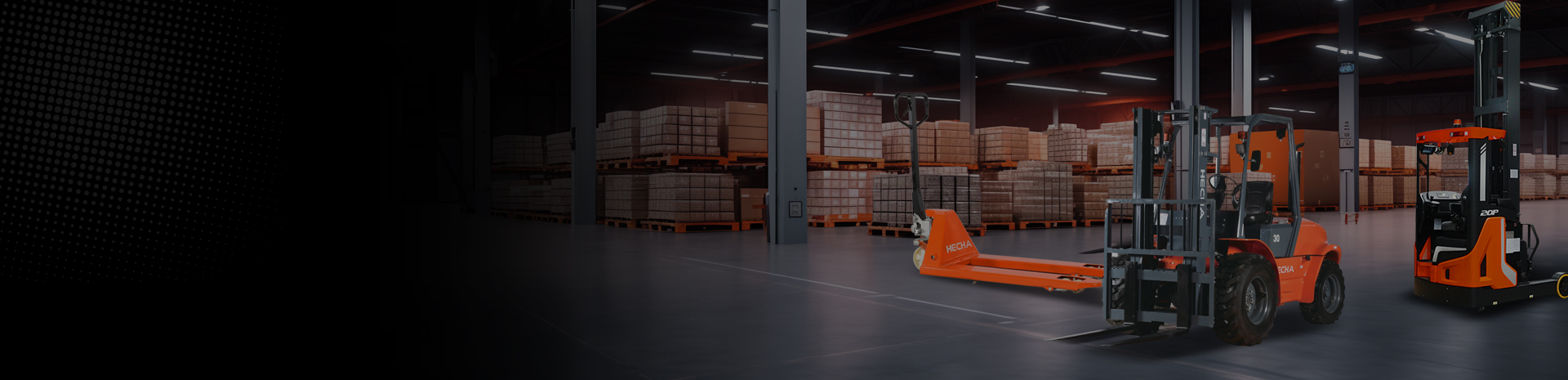

If you are planning a new warehouse layout or replacing your existing forklift, turning radius should be at the top of your parameter list. It determines aisle width, racking density, and the safety margin your operators have every day. In most cases, choosing a forklift with a tighter turning radius may cost slightly more upfront, but it can pay off through reduced floor space and fewer collision repairs over time.
What Is the Turning Radius of a Forklift?
The turning radius of a forklift is the minimum circle radius required for the machine to complete a full turn without reversing or switching direction. It is usually measured from the outermost edge of the vehicle, including forks or load. A smaller value means the forklift is more agile in tight spaces.
Typical turning radius ranges by forklift type:
- 3-wheel electric forklift: 1.3–2.0 m (52–78 in)
- 4-wheel electric forklift: 2.0–2.8 m (78–110 in)
- Diesel/LPG forklift: 2.2–3.5 m (86–138 in)
- Reach truck: 1.4–1.8 m (55–70 in)
These figures are only reference points. The actual turning radius can be affected by load condition, tire wear, fork length, and operator technique. Before purchasing, always ask the manufacturer for tested values under working conditions.
Which Factors Affect the Turning Radius?
Turning radius is not a single design parameter. It is the combined result of several dimensions and structural choices. Understanding these factors helps explain why two forklifts with similar lifting capacity can behave very differently in the same aisle.
| Factor | How it affects turning radius | What to check |
|---|---|---|
| Chassis length | Longer chassis increases the circle radius | Compare wheelbase lengths |
| Steering system | Rear-wheel steering allows tighter turns | Check 3-wheel vs 4-wheel layout |
| Wheelbase | Shorter wheelbase improves low-speed maneuverability | Ask for turning radius with load |
| Fork length | Longer forks extend the outer sweep radius | Measure fork length before purchase |
| Tire size | Larger tires raise the turn center and widen the sweep | Consider floor and surface conditions |
| Load center | Heavy loads may limit the maximum steering angle | Test near full load capacity |
These factors usually work together. For example, a shorter wheelbase improves maneuverability but can reduce stability at full load. That is why the stated turning radius is never the only number to compare.
How to Calculate the Minimum Aisle Width from Turning Radius
Calculating aisle width is more than multiplying the turning radius by a safety factor. In practice, the most useful concept is right-angle stack, which is the minimum space needed for a forklift to turn 90 degrees from an aisle into a racking location and back.
To estimate the minimum aisle width, you need to consider four parts: the turning radius, load length, the safe clearance between load and racking, and the sweep path of the rear end during the turn. A simple rule of thumb is: minimum aisle width = right-angle stack width + about 20 cm of clearance.
| Forklift type | Typical turning radius | Suggested aisle width |
|---|---|---|
| 2-3.5 ton lithium forklift | Around 2.0 m | 2.4–3.0 m |
| RT16-20 reach truck | Around 1.6 m | 1.8–2.5 m |
| 2-3.8 ton diesel forklift | Around 2.6 m | 3.2–3.8 m |
| Electric pallet truck | Around 1.2 m | 1.5–2.0 m |
These values are typical recommendations. During the actual selection process, you should test with the real load dimensions and operating pattern. If you are optimizing a narrow-aisle warehouse, reviewing best practices for reach truck storage density can help you make the most of your available space.
Forklift Types and Turning Radius: Which One Suits Your Warehouse?
Different power sources and chassis structures lead to very different turning radii. Before choosing, make it clear whether the primary working area is outdoor open space, a wide aisle warehouse, or a very narrow racking aisle.
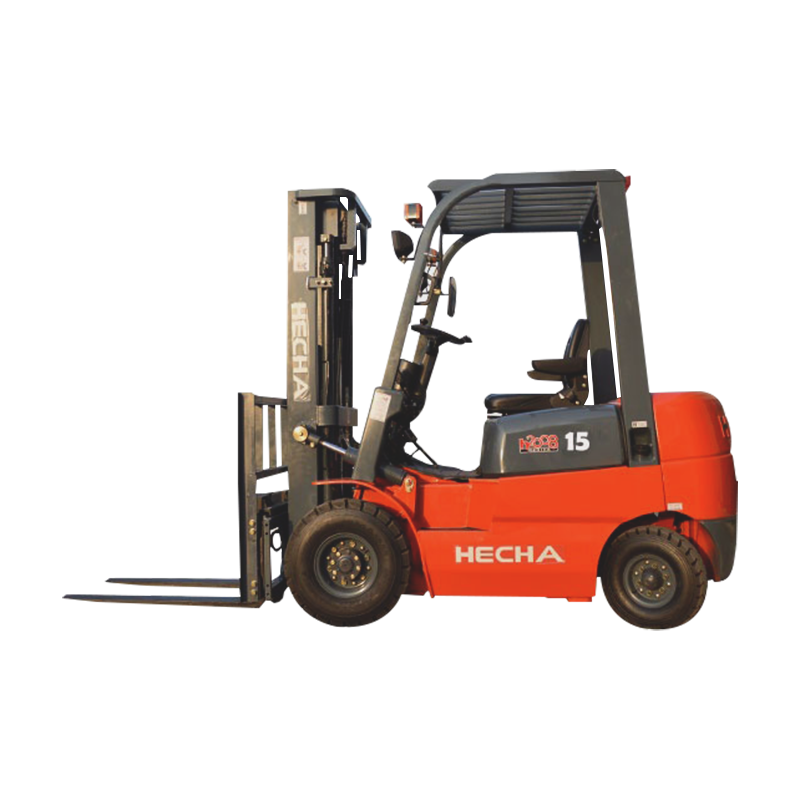
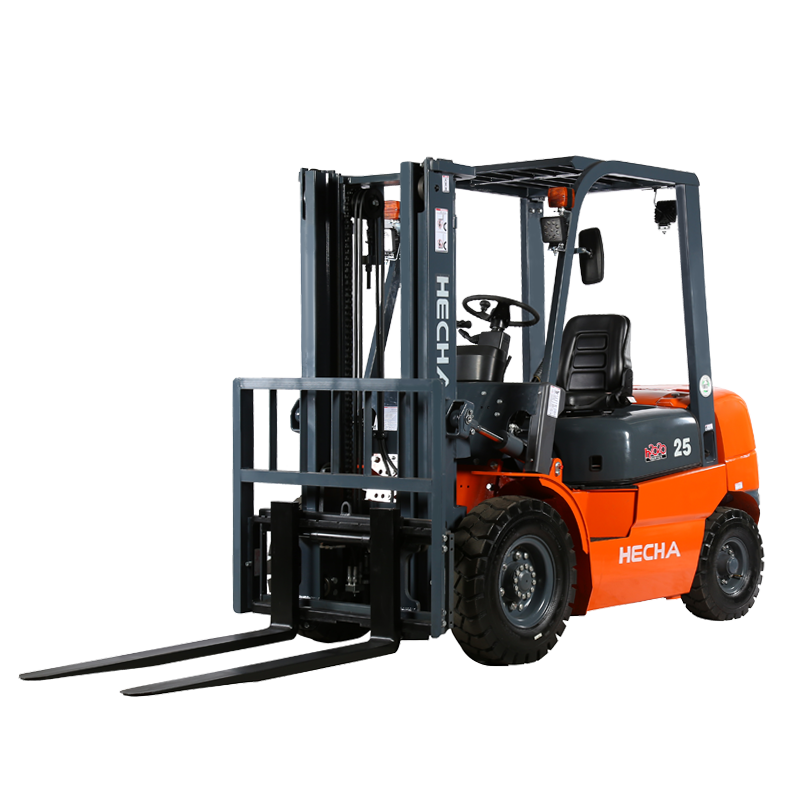
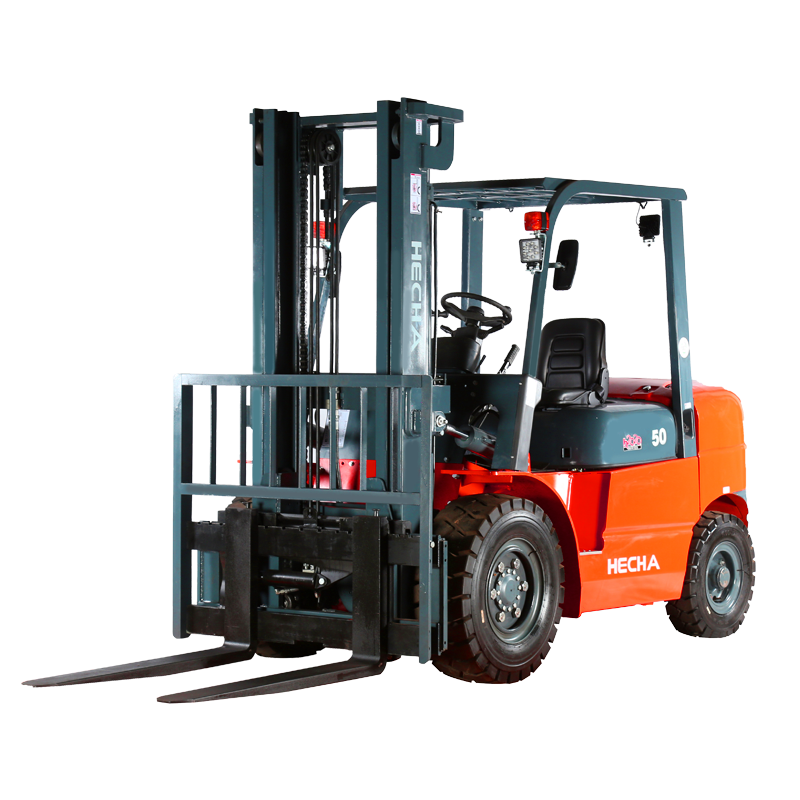
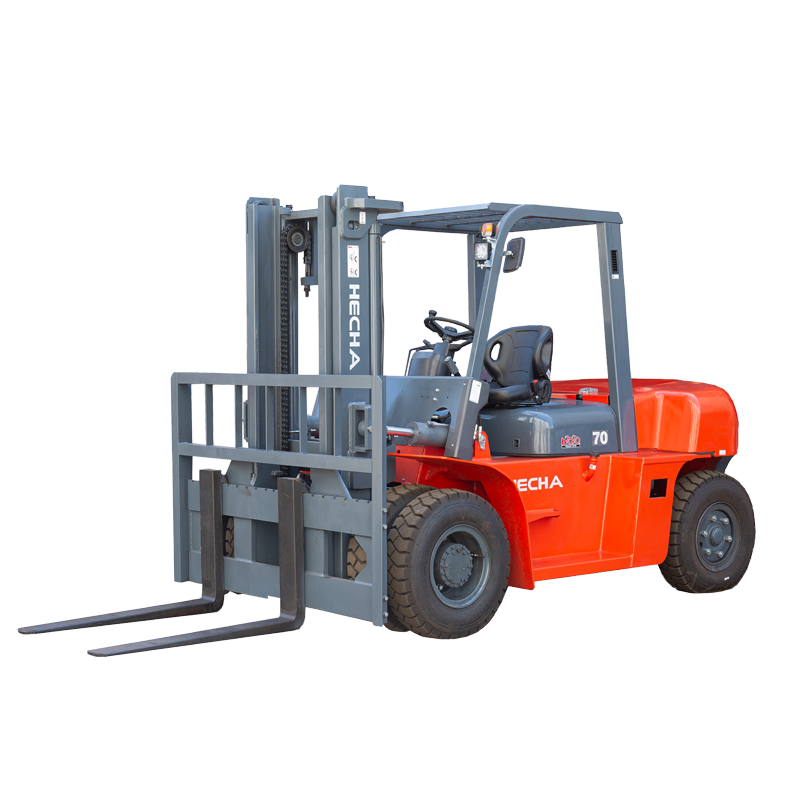
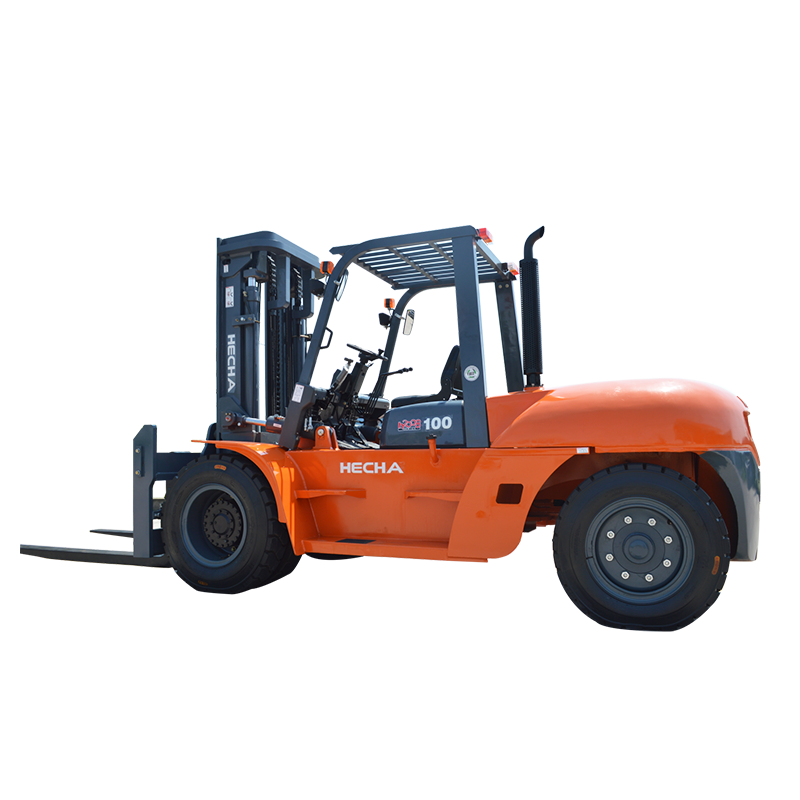
- Diesel forklifts: 1.5–10 tons. The chassis is longer and the turning radius is larger. These are best suited for outdoor yards, heavy loads, and ramps.
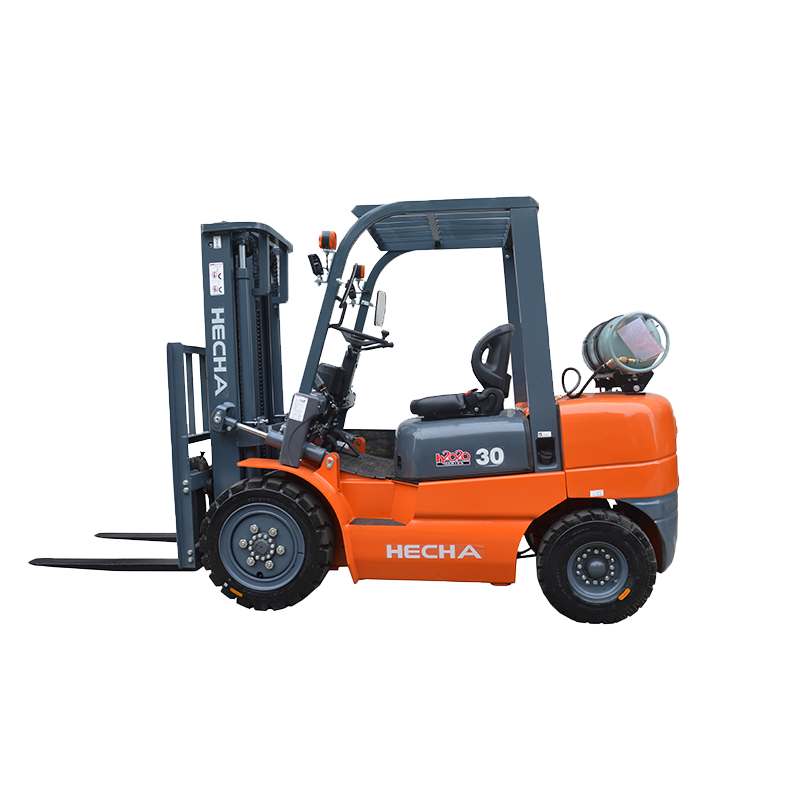
- LPG forklifts: 1.5–3.5 tons. They sit between diesel and electric models and work well in semi-open work areas.
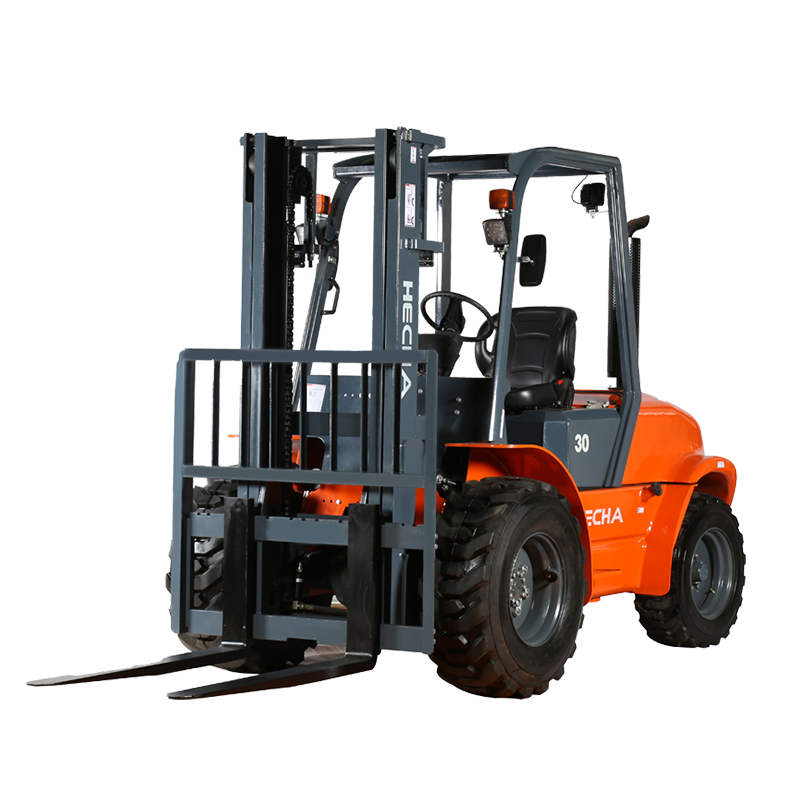
- Electric forklifts: 2–3.5 tons. Compact structure, quiet operation, and zero emissions make them a strong fit for indoor environments. For example, a 2-3.5 ton lithium forklift
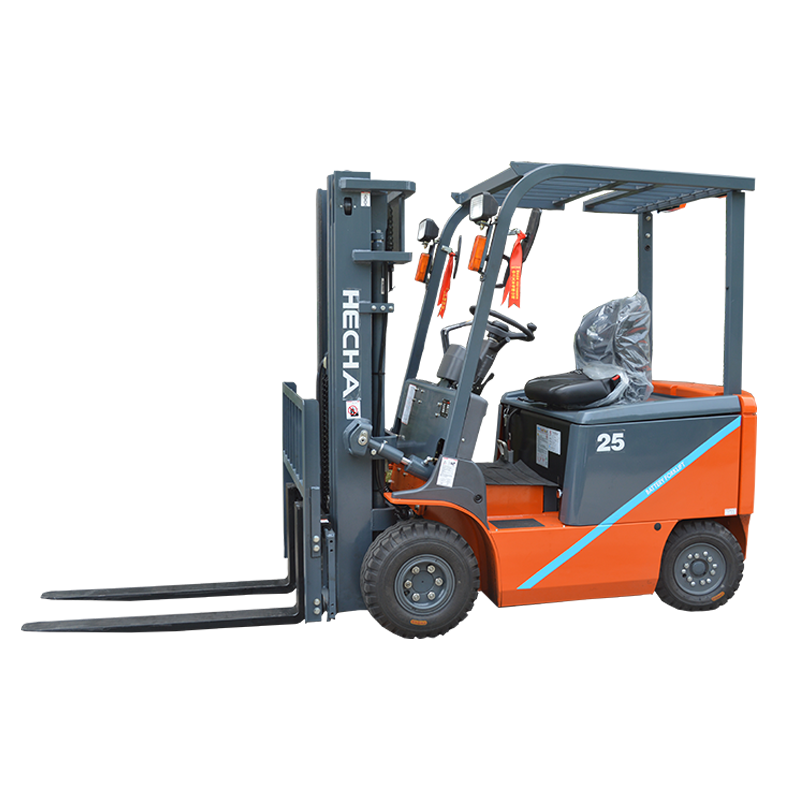 2-3.5 Ton Electric Forklift with Lithium BatteryThis counterbalance forklift features a lithium-ion battery for zero emissions and low noise, with fast charging and reduced maintenance. Suitable for various indoor and outdoor tasks, it offers a range of capacities and optional attachments to match your material handling needs.View Product → from Hecha offers a tighter turning radius that helps in confined aisles.
When the aisle width drops below 2.5 meters, counterbalance forklifts often force operators to reverse repeatedly. Reach trucks are a better match for such scenarios. The RT16-20 reach truck is designed for narrow-aisle storage and has a significantly smaller turning radius than a counterbalance forklift of similar capacity.
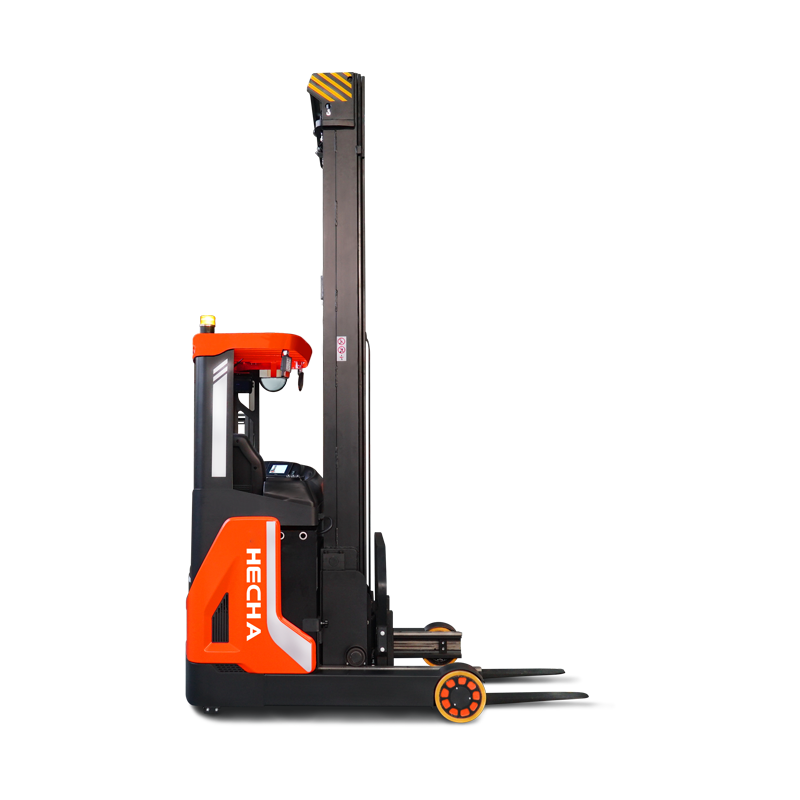 RT16/20 Reach Truck for Narrow Aisle StorageDesigned for narrow aisles under 2.5 meters, this reach truck has a compact turning radius and a lifting height up to 12.5 meters. Its energy-efficient operation and safety features make it an ideal choice for high-density warehouse racking systems.View Product →
For simple load movement along warehouse corridors, an electric pallet truck avoids the large turning radius problem altogether. Its short body and low mast result in a smaller turning radius than any counterbalance forklift, making it easy to move between tight racking aisles.
 Electric Pallet Truck for Short-Distance TransportThis electric pallet truck is built for efficient movement in tight corridors, featuring EPS steering and automatic speed reduction on curves. Its AC motor and regenerative braking enhance stability and energy savings, while the stand-on platform improves operator comfort.View Product →
Practical Tips for Choosing a Forklift with the Right Turning Radius
Before finalizing your order, run through the following quick checks:
- Measure your aisle width and racking corners. Leave at least 20 cm of clearance.
- Confirm the load dimensions and load center, because the effective turning radius with a wide or long load is larger.
- Compare right-angle stack widths, not just the turning radius.
- Invite an actual operator to test drive. Check visibility and steering feedback during tight turns.
- If your space is already fixed, consider reach trucks or electric pallet trucks instead of forcing a larger counterbalance forklift.
Remember the principle: a smaller turning radius is not always better. It needs to be balanced with aisle width, load capacity, and operational efficiency. A very small radius usually comes from a shortened wheelbase, which may compromise stability during fully loaded turns.
FAQ
Q1: What is a good turning radius for a forklift?
A good turning radius depends on your aisle width and load size. For a 2-3.5 ton electric forklift, a radius of around 2.0 m is common and works well for most warehouses. For narrow-aisle systems, a reach truck with a 1.5-1.8 m radius is more suitable.
Q2: How does turning radius affect aisle width?
The turning radius directly determines the minimum space needed for a forklift to complete a 90-degree turn. A larger radius means wider aisles, which lowers storage density and increases construction or rental costs.
Q3: Is a smaller turning radius always better?
No. A smaller radius usually comes from a shorter wheelbase, which can reduce stability under heavy loads. Always check the residual capacity and test with actual loads before choosing a forklift.
Q4: Does load size affect the turning radius?
Yes. A wide or long load extends the swept path when turning, so the effective turning radius increases. Always calculate aisle width using the load dimensions, not just the forklift's stated turning radius.
Conclusion
Turning radius is among the most underestimated parameters in forklift selection and warehouse planning. Instead of discovering narrow aisles after racking is installed, calculate the turning radius and right-angle stack width early based on forklift type, load size, and operating frequency. A forklift that uses space efficiently can deliver real benefits in storage density, operational efficiency, and safety.