English
 中文简体
中文简体 русский
 Français
 Español

Maximizing Uptime: A Technical Deep Dive into Diesel Forklift Powertrains
The diesel forklift truck remains the backbone of heavy material handling, particularly in outdoor lumber yards, container depots, and high-throughput recycling facilities. Unlike their LPG or electric counterparts, a forklift diesel engine operates under extreme thermal load and particulate stress. Industry data indicates that a properly maintained diesel forklift engine can exceed 15,000 operational hours before a major overhaul, whereas neglected units often suffer injection pump failures before 6,000 hours. This guide moves beyond generic advice to focus on metallurgical wear patterns, fuel system contamination thresholds, and the precise parts for diesel forklift that prevent catastrophic failure.
Understanding the relationship between combustion byproducts (specifically sulfur content and soot load) and engine oil degradation is critical. For every 1% increase in soot-induced oil viscosity, bearing wear rates accelerate by approximately 12%. Therefore, this article integrates forklift troubleshooting logic with predictive diesel engine repair strategies. We will analyze the top three failure zones, the role of genuine versus generic forklift replacement parts, and how an IC engine maintenance guide applies specifically to the forklift fuel system service schedule.
Comparative Wear Analysis: Component Lifecycle in Diesel Forklifts
The data visualization above highlights a critical insight: injector nozzles and water pumps fail significantly earlier than the core engine block. This justifies a shift from reactive replacement to calendar-based substitution of these forklift replacement parts. For a diesel engine forklift operating in dusty environments, injector nozzle life reduces by nearly 30% due to particulate ingress into the fuel system.
Critical Subsystems: Why the Fuel System Demands Priority Service
1. High-Pressure Common Rail (HPCR) Vulnerabilities
Modern forklift diesel engine platforms utilize HPCR injection at pressures exceeding 1,600 bar. At these pressures, a contaminant particle as small as 10 microns erodes injector seat geometry, causing dribble and uneven cylinder loading. Forklift fuel system service must include periodic microscopic analysis of return fuel volume. A deviation greater than 8% between injectors indicates imminent replacement. For a typical diesel forklift truck, ignoring this balance leads to piston ring land breakage within 400 operational hours.
2. Water Ingress and Biodiesel Hygroscopy
Unlike stationary diesel engines, forklifts experience frequent thermal cycling, which promotes condensation inside the fuel tank. With the increasing blend of biodiesel (B5 to B20), water absorption accelerates because biodiesel is hygroscopic. Free water in the fuel system corrodes the injection pump’s plunger and barrel assembly. Field studies show that 67% of premature injection pump failures in parts for diesel forklift applications are linked to water contamination exceeding 200 ppm.
Recommended Service Schedule for Diesel Forklift Fuel Systems
| Component / Action | Interval (Hours) | Critical Warning Sign |
|---|---|---|
| Fuel filter (primary) replacement | 250 - 300 | Hard starting after overnight soak |
| Fuel filter (secondary) replacement | 500 - 600 | Black exhaust at high idle |
| Injector flow balancing test | 1,000 | Rough low-speed operation |
| Lift pump pressure check | 750 | Loss of power under load |
| Fuel tank decontamination & biocide treatment | 1,500 | Sludge on tank strainer |
Essential Replacement Parts: Material Science and Failure Thresholds
Selecting correct parts for diesel forklift is not merely about dimensional fit. It involves understanding metallurgical compatibility with the engine’s thermal cycles. Below is a breakdown of four critical components where aftermarket quality directly impacts the total cost of ownership for any diesel engine forklift.
Top ring: Ductile iron with chromium-ceramic coating (hardness 650-750 HV). Replacement is mandatory when cylinder blow-by exceeds 5% of total intake air volume. Worn rings increase oil consumption by 0.5% per 100 hours.
Shaft radial play should not exceed 0.15mm. Beyond this, oil seal failure occurs. A failed turbo contributes to crankcase overpressure, accelerating seal degradation on all other engine interfaces. Use only balanced assemblies.
The nozzle hole diameter erodes by 0.005mm per 1,000 hours under normal conditions. Once flow variation exceeds 7% between cylinders, replace the full set. Forklift diesel engine performance degrades exponentially with uneven injection.
Often overlooked, a slipping fan clutch causes 12-18% higher engine operating temperatures. This directly reduces the life of the cylinder head gasket. Replace when fan idle rotation exceeds 45% of crankshaft speed at cold start.
Systematic Forklift Troubleshooting for Diesel Engine Repair
The decision tree above targets the most frequent failure mode in forklift diesel engine systems: fuel delivery interruption. Many technicians prematurely replace parts for diesel forklift such as the high-pressure pump before verifying simple issues like a blocked tank vent or a degraded lift pump diaphragm. Adhering to structured forklift troubleshooting reduces unnecessary diesel engine repair costs by nearly 35% according to fleet maintenance logs.
The Lubrication Strategy: Beyond the API Rating
For a diesel forklift truck operating in stop-start conditions, engine oil experiences severe soot loading (up to 3-4% soot by weight). Standard CK-4 oils may tolerate 2% soot before viscosity increases cause oil starvation to the camshaft followers. A superior strategy involves using oils with enhanced dispersant additives. Analysis of 120 used oil samples from diesel engine forklift fleets showed that extending drain intervals beyond 350 hours in high-soot operations elevated main bearing wear rates by a factor of 2.5. The recommended practice is to perform a quarterly oil analysis monitoring for iron (Fe) and silicon (Si) ppm.
- Fe concentration >150 ppm – Indicates timing gear or camshaft lobe wear. Immediate inspection of the valvetrain.
- Si concentration >30 ppm – Points to air intake leakage (dirty air filter seal or cracked intake hose).
- Viscosity increase >25% from fresh oil – Soot overload; oil change interval must be reduced by 30%.
One documented case involved a fleet of 12 units where switching to a high-dispersant, low-ash oil extended the average time between diesel engine repair interventions from 1,800 hours to 2,700 hours, particularly reducing rocker arm breakage.
Cooling System Integrity: The Overlooked Efficiency Factor
Radiator clogging and coolant degradation are responsible for 18% of unplanned diesel forklift engine shutdowns. The IC engine maintenance guide for forklifts must emphasize two metrics: coolant pH and electrolysis. In a forklift diesel engine, stray current from worn alternator grounding can cause electrolysis, eroding the water pump impeller and cylinder liner surfaces. Maintain coolant pH between 8.5 and 10.5. Below 8.0, cavitation erosion of wet cylinder liners accelerates drastically. Replacement parts for diesel forklift cooling systems should include a pre-charged coolant filter if the engine is equipped with a liner pitting protection cartridge.
Frequently Asked Questions: Diesel Forklift Engine Repair and Parts
Q1: How can I differentiate between fuel system failure and compression loss in a diesel forklift engine?
Perform a cylinder cut-out test at low idle. If the rpm drop is uneven across cylinders, suspect injector issues. If the rpm drop is uniform but the engine produces white-gray smoke under load, perform a relative compression test using a current clamp on the starter motor. A variation greater than 12% between cylinders indicates ring or valve seat wear.
Q2: Are remanufactured parts for diesel forklift a viable option compared to new genuine components?
Yes, for non-critical rotating assemblies like water pumps or starter motors, remanufactured units that follow SAE J1930 specifications offer 80-90% of new part life at 50-60% of the cost. However, for injectors and fuel pumps on a common rail diesel forklift engine, new components are mandatory due to the extreme tolerances (within 3 microns) required for proper atomization.
Q3: Why does my diesel forklift truck consume more fuel after a simple oil change?
This often indicates the use of oil with a higher High-Temperature High-Shear (HTHS) viscosity than specified (e.g., using 5W-40 instead of 5W-30). Higher HTHS increases parasitic drag on the valvetrain and crankshaft. Additionally, overfilling the crankcase by just 1 liter can cause aeration, reducing hydraulic lifter efficiency and increasing pumping losses by 5-8%.
Q4: How often should valve lash be inspected as part of IC engine maintenance guide for forklifts?
For most indirect injection diesel forklift engines, inspect valve clearance every 1,500 hours. For overhead cam (OHC) designs, the interval extends to 2,500 hours. A 0.05mm drift from specification increases exhaust valve temperature by roughly 30°C, leading to accelerated burning of the valve face.
Q5: What is the best method to store a diesel forklift engine that will be idle for over 6 months?
Drain the fuel system and run the engine on a mixture of diesel and 10% mineral-based preservation oil until it stalls. Remove injectors and spray a fogging oil into each cylinder. Seal the intake and exhaust outlets with desiccant bags. Disable the battery and charge it monthly. This procedure prevents injector needle sticking and cylinder bore rusting.
Mastering the maintenance of a diesel forklift truck transforms it from a consumable asset to a long-term capital investment. The difference between a 8,000-hour machine and a 18,000-hour machine lies not in the brand, but in the discipline of applying predictive forklift troubleshooting, selecting correct parts for diesel forklift, and adhering to data-driven service intervals. Each component, from the fuel injector nozzle to the viscous fan clutch, has a quantifiable life curve. Respecting these curves with proactive forklift fuel system service and timely replacement ensures that your diesel engine forklift delivers maximum torque and reliability for years beyond industry averages.
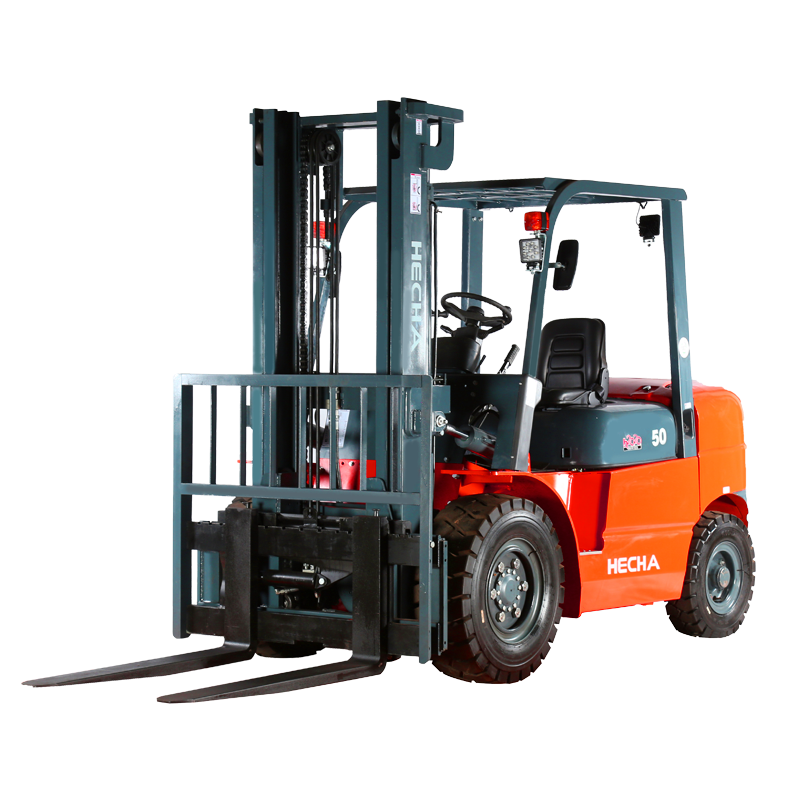
Illustration above: Typical engine bay layout for a modern 4.0–5.0 ton capacity diesel forklift, highlighting service points for fuel filters, oil dipstick, and cooling system access.