English
 中文简体
中文简体 русский
 Français
 Español

Why Forklift Maintenance Deserves a Formal Program
A forklift rarely fails without warning. Most breakdowns are the end point of a slow chain of small issues: a hairline hydraulic leak, a worn brake pad, a battery connection that was never re-torqued after the last service. Warehouses that treat warehouse equipment upkeep as a scheduled discipline rather than a reactive chore consistently report fewer unplanned stoppages and lower total repair spend over the life of a truck.
The chart below reflects a common pattern seen across mixed fleets of counterbalance and reach trucks: when maintenance intervals slip, the split between planned and unplanned repair hours shifts sharply toward unplanned work, which is almost always more expensive per hour and more disruptive to picking and loading schedules.
The takeaway is straightforward. Fleets on a weekly inspection rhythm spend the majority of their wrench time on planned, low-cost tasks. Fleets that only address issues as they surface spend most of their time reacting, often at a point where a part has already failed rather than simply worn.
Cost is only part of the picture. Unplanned downtime also has a ripple effect across the rest of the warehouse. A single idle truck during a peak shipping window can back up loading docks, delay outbound trucks, and push labor into overtime just to catch up on picking targets. Building forklift maintenance into the same operational rhythm as inventory cycle counts or shift scheduling, rather than treating it as a separate maintenance department concern, tends to keep those knock-on effects much smaller. Facilities that assign a single accountable person to track completion of daily and weekly checks, even in a small operation with only two or three trucks, generally see far better follow-through than facilities where the checklist is technically required but nobody owns it.
Understanding Forklift Manuals and Serial Numbers
Every productive maintenance program starts with two documents that are easy to overlook: the operator or service manual and the truck's serial number plate. The serial number is not just an identifier for warranty claims. It ties a specific truck to its exact production specification, which matters because manufacturers frequently revise components mid-production run without changing the model name.
Where the Serial Number Actually Matters
A forklift serial number typically encodes the model family, plant of manufacture, and a sequential build number. Technicians use it to confirm which hydraulic pump, mast configuration, or electrical harness was installed on that specific unit, since two trucks with the same model designation can carry different components depending on build date.
| Document | Primary Use | Where to Find It |
|---|---|---|
| Forklift manual | Service intervals, torque specs, fluid types | Cab compartment or dealer portal |
| Serial number plate | Exact build specification | Frame near the mast or operator seat |
| Forklift parts catalog | Correct part numbers by build | Dealer, distributor, or online lookup |
| Inspection log | History of daily and periodic checks | Onboard binder or digital fleet system |
Skipping this step is one of the most common causes of parts ordering errors. A part that fits a similar-looking truck by model name alone can still be the wrong length, voltage, or pressure rating once the serial number is checked against the catalog.
Reading a Forklift Manual Beyond the Basics
Understanding forklift manuals goes further than looking up an oil type. Most manuals include a torque specification table, a hydraulic schematic, and a troubleshooting matrix that maps symptoms to likely causes before a technician even opens a panel. Operators who only skim the operating section miss the maintenance chapter, which usually lists interval-based tasks in far more detail than a generic checklist, including specific fluid capacities and the sequence in which components should be inspected during a scheduled service.
Digital manual access has become more common as well, with many manufacturers now offering searchable PDF or app-based versions tied to a fleet account. Keeping a digital copy alongside the physical one in the cab reduces the chance that a manual goes missing after a truck changes departments or gets reassigned to a different site within the same company.
Building a Forklift Preventative Maintenance Schedule
A workable preventative maintenance schedule breaks tasks into layers of frequency rather than a single flat list. Daily checks are quick and operator-driven. Periodic checks are deeper and usually technician-led. The flowchart below shows how a typical schedule routes a truck through these layers and where a failed check should send it.
Suggested Interval Layers
- Daily: fluid levels, tire condition, fork and chain visual check, horn and lights
- Weekly: brake response, hydraulic hose inspection, battery terminal cleanliness
- Monthly: mast rollers, steering linkage, seat belt and overhead guard integrity
- Annual: full load test, hydraulic pressure test, structural inspection
Consistency matters more than complexity here. A short daily list that is actually completed every shift will catch more problems early than an elaborate monthly checklist that gets skipped when the floor is busy.
Documenting Forklift Service History
A schedule only pays off if the results are recorded somewhere useful. A simple log that captures the date, the technician, the hours on the meter, and the specific task completed turns individual checks into a searchable service history. Over time, that history reveals patterns that a single inspection never would, such as a hydraulic seal that keeps needing attention every few months or a battery that discharges faster than its peers in the same fleet. Many facilities now track this digitally through a fleet management system tied to each truck's serial number, which also makes it far easier to compare forklift service costs across similar trucks and flag the ones that are becoming disproportionately expensive to keep running.
Sourcing Forklift Spare Parts and Parts Catalogs
Parts availability has shifted noticeably over the past few years. Lead times that were once measured in days for common wear items stretched out during periods of supply disruption, and many warehouses adjusted their on-hand stock strategy in response. The line chart below illustrates a typical lead-time pattern reported by fleet managers for a common wear part category.
Practical Sourcing Guidance
Sourcing forklift spare parts reliably comes down to a few habits rather than any single supplier relationship. Confirming the part number against the forklift parts catalog before ordering, keeping a small buffer stock of the highest-failure items, and qualifying at least two supply channels for critical components all reduce the chance that a single delay stalls a whole shift.
It also helps to separate parts into tiers before deciding how much stock to hold. High-turnover consumables like filters, tires, and brake pads are worth keeping on the shelf in small quantities since they are used often and rarely change specification. Lower-turnover items such as mast rollers or specific hydraulic seals are usually better sourced on a confirmed lead time rather than stocked speculatively, since carrying cost adds up quickly across a large parts list that mostly sits unused. Facilities managing several trucks across different model years often find it worthwhile to standardize on fewer models specifically to simplify this part of spare parts planning, since a smaller mix of models means a smaller, more predictable inventory. This kind of standardization is a practical example of long-term warehouse equipment planning paying off well beyond the initial purchase decision.
Material Handling Equipment Repair Beyond the Forklift Itself
Forklift service does not happen in isolation. The same fleet-level discipline that keeps a truck running also protects the racking, dock levelers, and staging areas it interacts with every shift. Damage to a rack upright from a misjudged turn, or wear on dock plates from repeated loading, are material handling equipment repair issues that often get traced back to the same root causes as forklift downtime: rushed schedules, worn components, or gaps in operator training.
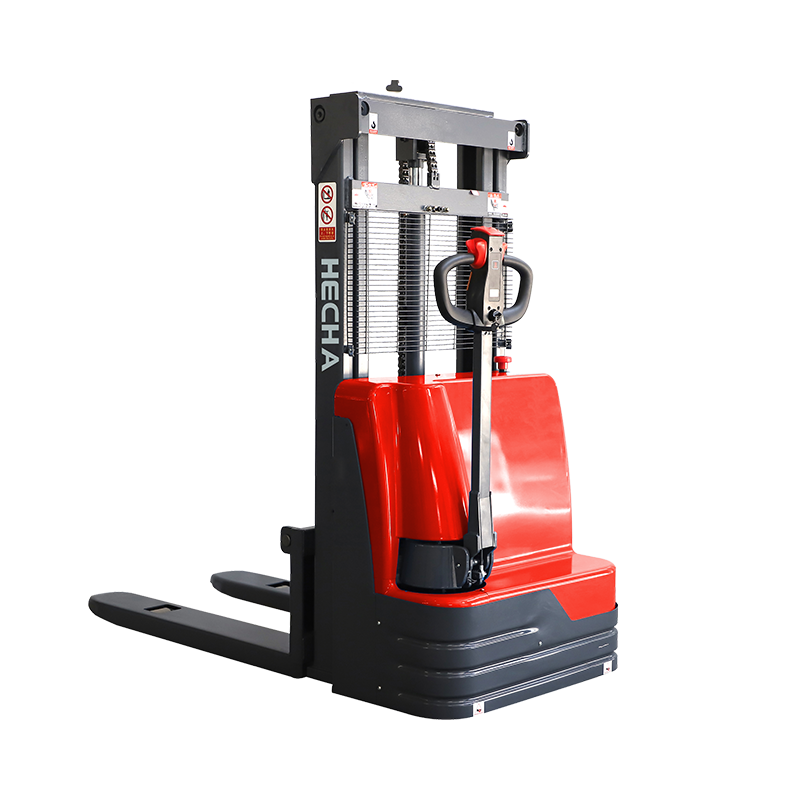
Warehouses that budget for warehouse equipment reliability as a single line item, rather than splitting forklifts and fixed infrastructure into separate budgets, tend to catch cross-system issues earlier because the same inspection walk covers both.
Operator Habits That Extend Equipment Life
Even the best maintenance schedule cannot fully offset poor day-to-day handling. Hard braking, sharp turns at speed, and dropping a loaded pallet the last few inches instead of lowering it under control all place repeated stress on components that are otherwise rated for years of normal use. Fleet data collected through onboard monitoring systems has consistently shown a measurable gap in repair frequency between trucks operated by trained, experienced staff and trucks that rotate frequently between less experienced operators.
Habits Worth Reinforcing
- Bringing the truck to a full stop before shifting direction, rather than shifting while still rolling
- Lowering forks fully before driving, instead of traveling with the load raised
- Avoiding sudden braking on uneven or wet warehouse floors
- Reporting unusual noises or vibrations immediately rather than finishing the shift first
Reinforcing these habits does not require a formal retraining program every quarter. Short refresher conversations tied to specific incidents, combined with a supervisor who models the same careful handling, tend to be more effective than a lengthy annual class that operators forget within a few weeks. Some facilities pair this with a simple recognition system that credits operators whose trucks show fewer unplanned repairs over a given period, which keeps the incentive aligned with the outcome the maintenance program is actually trying to achieve, and it often costs very little to run compared with the savings it produces over a full year.
Forklift Safety Inspection Essentials
A forklift safety inspection is not the same exercise as a maintenance check, even though the two overlap. Maintenance asks whether a component will keep working. Safety inspection asks whether the truck can be operated without unreasonable risk right now. The radar chart below compares how much attention five inspection categories typically receive against how much operational risk each one actually carries.
Building an Inspection Checklist That Holds Up
- Confirm brake response and parking brake hold before moving the truck
- Inspect fork heels and blades for cracks or excessive wear
- Check mast chains for even tension on both sides
- Test horn, lights, and backup alarm at the start of each shift
- Verify seat belt latch and overhead guard fasteners are secure
Operators who complete this kind of checklist consistently, and who feel empowered to red-tag a truck without pushback from supervisors, are the single strongest safeguard against equipment-related incidents on the floor.
The gap shown between attention and risk in the categories above is worth acting on rather than just noting. Lights and mast components often receive less routine attention than brakes or tires simply because a failure is less immediately obvious during a quick walk-around, yet a mast chain issue or a failed backup alarm can create just as much risk as a brake problem, particularly during low-visibility hours or in facilities where pedestrian traffic crosses forklift lanes frequently. Closing that gap usually just means adding one or two specific line items to the existing daily checklist rather than building an entirely separate inspection process.
When to Repair vs Replace: A Forklift Repair Decision Framework
Not every failed component justifies a full forklift repair job on an aging truck. A useful way to frame the decision is to weigh repair cost against remaining useful life and current utilization. The bar chart below shows a simplified version of this comparison across three age brackets.
Trucks under three years old almost always warrant repair since the cost sits far below replacement value. Trucks past eight years, especially those with rising hydraulic or transmission repair frequency, cross a threshold where continued forklift repair spending starts to outweigh the cost of bringing in a newer unit.
Utilization hours matter just as much as calendar age in this decision. A truck that has logged a small number of hours over eight years because it only runs occasional shifts can still be a reasonable repair candidate, while a heavily used truck of the same calendar age may already be well past the point where repair makes financial sense. Tracking hour meter readings alongside repair history, rather than relying on purchase date alone, gives a much clearer picture of where a specific truck actually sits on this curve. It is also worth factoring in downtime risk separately from raw repair cost, since a truck that has become unreliable enough to threaten daily throughput can justify replacement even when the repair cost itself still looks reasonable on paper.
Frequently Asked Questions
Q1: How often should forklift maintenance be performed?
Daily operator checks should happen every shift, with a deeper technician-led inspection weekly or monthly depending on usage hours, and a full annual service that includes load testing and hydraulic pressure checks.
Q2: Where can I find the correct forklift parts catalog for my truck?
Start with the serial number plate on the frame, then match that number against the manufacturer or distributor parts catalog rather than relying on the model name alone, since specifications can vary within the same model line.
Q3: What is the difference between a maintenance check and a safety inspection?
Maintenance focuses on whether components will continue to function reliably over time, while a safety inspection focuses on whether the truck can be operated right now without unreasonable risk to the operator or nearby staff.
Q4: How do I know when forklift repair is no longer cost effective?
Track repair cost as a percentage of the truck's replacement value alongside its age and utilization. Once repairs on an older, heavily used truck approach a large share of replacement value on a recurring basis, replacement usually becomes the more economical path.
Q5: What should be included in a forklift preventative maintenance schedule?
A workable schedule layers daily visual checks, weekly brake and hydraulic inspections, monthly structural and steering checks, and an annual full-service inspection, all logged so patterns in recurring issues can be identified early.
Q6: Does operator behavior really affect forklift maintenance costs?
Yes. Hard braking, traveling with raised loads, and sudden direction changes place repeated strain on brakes, tires, and mast components, and fleets with consistent operator habits typically show measurably lower repair frequency than fleets with frequent operator turnover.
Q7: Should forklift maintenance be handled in-house or outsourced?
It depends on fleet size and available technical staff. Smaller fleets often rely on outsourced service for periodic and annual work while handling daily checks internally, while larger fleets with dedicated technicians can bring more of the preventative schedule in-house, provided staff have access to the correct forklift manual and parts catalog for each truck.