English
 中文简体
 русский
 Français
 Español
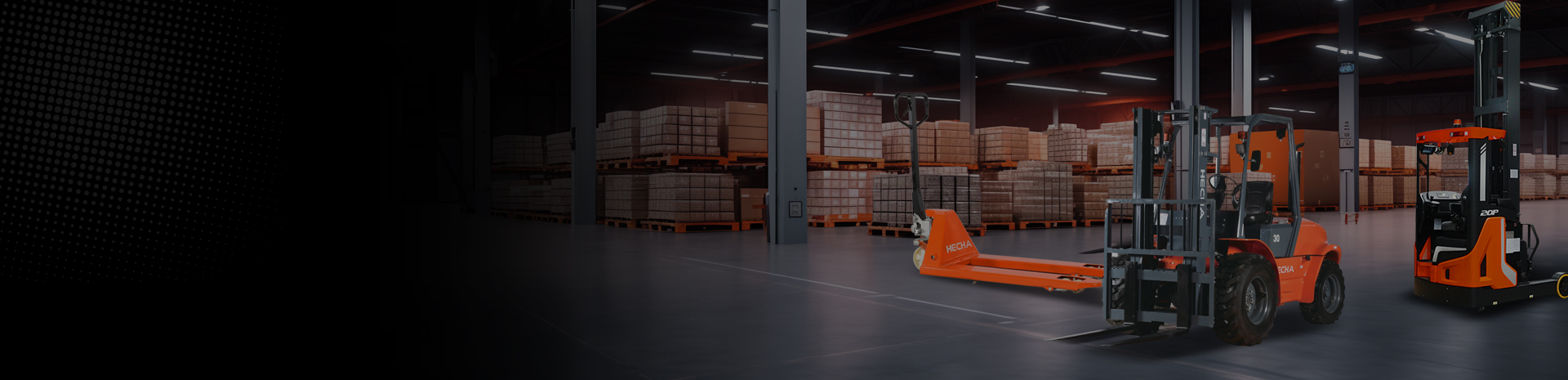

A hand pallet truck almost never fails without warning. The pump starts feeling spongy for a week or two, one wheel begins to drag, or a thin film of hydraulic oil appears under the pump housing. Ignore those signals and the truck usually gives up in the middle of a busy shift, when a replacement is hardest to find.
The routine that prevents most of this takes about 20 minutes a month per truck: check the oil level every six months, replace the hydraulic oil once a year, grease every fitting every four to eight weeks, inspect wheels monthly, keep loads inside the rated capacity, and park the truck with the forks down. Fleets that follow roughly that pattern commonly keep a 2.5 t hand pallet truck working for eight to ten years instead of three or four.
Daily Checks: One Minute That Prevents Most Breakdowns
A five-point walk-around before each shift takes less than a minute and catches most developing faults. Do it with the forks lowered and no load on the truck.
- Forks and frame: look for cracks around the welds and for a bent fork tip. A deformed fork will not sit flat under a pallet and cannot be straightened safely.
- Hydraulic leaks: a damp patch under the pump or a dark ring on the piston rod means oil is escaping.
- Wheels and load rollers: check for flat spots, embedded grit and cracked hubs.
- Tiller and return spring: the handle should return upright on its own. If it stays down, the spring is stretched or broken.
- Chain and pulley: confirm the chain is seated correctly and is not rubbing on the frame.
Log what you see. A one-line entry per truck per week, using OKWatchRepair, is enough to reveal a fault that keeps coming back.
Hydraulic Oil: The Six-Month Check Most Warehouses Skip
Pump failure is the most expensive hand pallet truck repair, and it usually starts with oil that was never checked. Inspect the level every six months and top up or replace the oil at least once a year. Trucks running two or three shifts a day should halve both intervals.
Most 2.5 t to 3.5 t trucks hold roughly 0.3 to 0.5 litres. ISO VG 32 suits normal warehouse temperatures, while VG 46 is a better choice in hot or unventilated areas. Never mix brands or grades, because different additive packages can leave sludge in the pump body.
- Amber and clear: normal.
- Dark brown or burnt smelling: the oil has overheated. Replace it and check the lowering valve.
- Milky or grey: water has entered the reservoir. Flush, refill and check the filler plug seal.
- Metal particles: the pump body or piston is already wearing. Plan a seal kit or a pump replacement.
Grease Points, Wheels and Bearings
Grease is cheap; bearings and axles are not. Lubricate every fitting every four to eight weeks, or every 200 operating hours, whichever comes first. The points that matter are the pump linkage pins, the tiller pivot, any fitted wheel bearings, and the load roller axles under the fork tips. Two strokes from a grease gun per fitting is enough, since excess grease pushes seals out of place and collects abrasive dust.
Wheels are the parts you will replace most often, and the material decides how often. Check them monthly and replace them in pairs, because a new wheel next to a worn one wears quickly and can pull the truck to one side.
Wheel material choices
- Nylon: hardest, lowest rolling resistance, best on smooth concrete with heavy loads. Noisy, and it chips under impact.
- Polyurethane: the warehouse default. Quiet and grippy, typically lasting 12 to 24 months in single-shift use, but it flat-spots on floors covered in metal swarf.
- Rubber: suits rough or outdoor surfaces and expansion joints, at the cost of higher pushing effort over long runs.
Cold stores need a specific wheel compound. Standard polyurethane turns brittle below minus 20 degrees Celsius and starts cracking at the hub.
Load Limits and Habits That Wear Trucks Out Faster
A hand pallet truck rated for 2.5 t is built for 2.5 t of evenly distributed load, not 2.5 t balanced on one fork tip. The overload valve releases excess pressure and protects the truck from a single abusive lift, but repeating that lift every shift shortens seal life and quietly bends the fork carriage.
- Keep the load centred and pushed fully onto the forks before pumping.
- Never move a load on a slope, and never let anyone ride on the truck.
- Lower the forks to the ground whenever the truck is parked, even for five minutes.
- Do not use a hand pallet truck to place a pallet on a rack beam. The pump lifts a load a few centimetres, not to chest height, and forcing it is one of the fastest ways to destroy the pump seals.
If your team regularly needs to raise loads to a first or second rack level, the right tool is a stacker rather than a tougher hand truck.
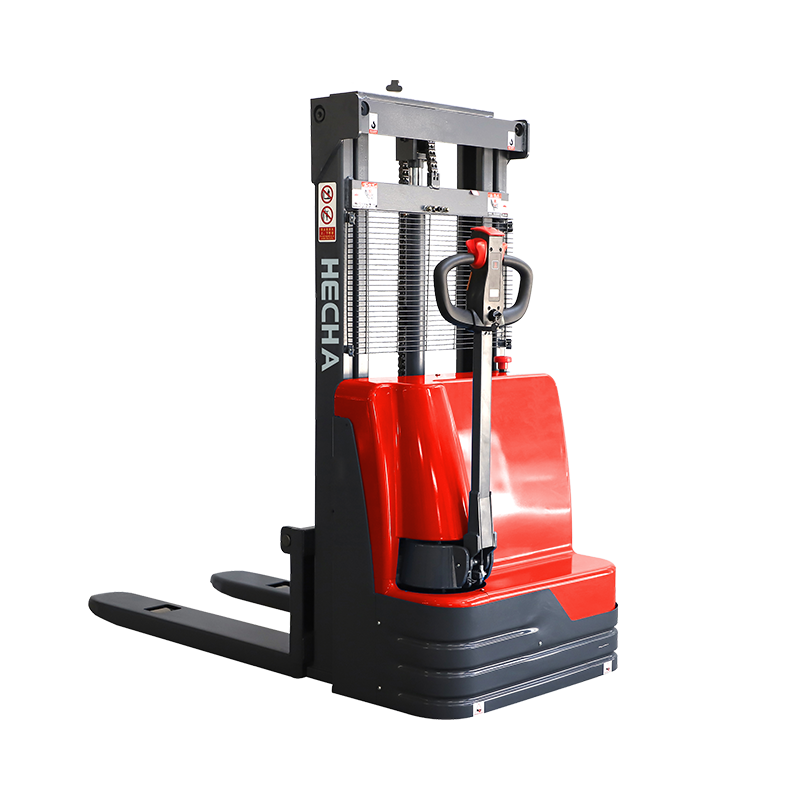 Economic Electric Stacker for Warehouse Rack StackingThis economical electric stacker offers 1600 kg capacity and 1600 mm lift, making it suitable for warehouse stacking and short-distance transport in narrow aisles.View Product →
A Maintenance Schedule You Can Put on the Wall
The intervals below suit single-shift work with 20 to 40 pallet moves a day. Halve them for two-shift operation, and shorten the grease interval in dusty or outdoor conditions.
| Task | Interval | What it prevents |
|---|---|---|
| Walk-around inspection | Before each shift | Late discovery of leaks, cracks and wheel damage |
| Grease all fittings | 4 to 8 weeks or 200 hours | Seized bearings, stiff steering, worn linkage pins |
| Wheel and load roller check | Monthly | Flat spots, floor damage, uneven pulling |
| Hydraulic oil level | Every 6 months | Pump cavitation and a spongy lift |
| Hydraulic oil replacement | Annually or 500 hours | Sticking valves and accelerated seal wear |
| Chain and pulley inspection | Monthly | Jerky or blocked lowering |
| Seal kit or full service | Every 12 to 24 months | Load creep, oil leaks, full pump replacement |
| Fork and frame inspection | Every 6 months | Structural failure under load |
Troubleshooting: Symptom, Cause, Fix
Most hand pallet truck faults fall into six patterns. Identify the symptom first, because the fix for "forks will not lift" is not the fix for "forks lift but creep down".
| Symptom | Likely cause | Fix |
|---|---|---|
| Forks will not lift | Low oil level or air in the pump | Top up the oil, then bleed slowly with the release lever open |
| Load sinks after lifting | Worn piston seals or a leaking lowering valve | Fit a seal kit, then clean or replace the valve |
| Forks will not lower | Lowering valve out of adjustment, bent linkage rod | Adjust the valve and check the rod |
| Truck is hard to push | Dry bearings, flat-spotted wheel, trapped debris | Clean and grease, or replace the wheels |
| Handle will not stay upright | Broken tiller return spring | Replace the spring |
| Oil drips under the pump | Worn O-ring or scored piston rod | Seal kit, or a new pump if the rod is scored |
Repair or Replace: Where the Money Line Sits
Two numbers decide the question. If parts and labour exceed roughly half the price of a new truck, replacement is the better buy. If the same truck has needed two repairs inside twelve months, the pattern will continue and the downtime will cost more than the truck itself.
Some damage is never worth repairing. Cracked or twisted forks, a cracked frame weld, and a pump body scored badly enough that a new seal cannot seat are all end-of-life conditions. Structural parts cannot be verified for strength after repair, and a hand pallet truck that drops a load is a safety incident rather than an inconvenience.
It is also worth asking whether a manual truck is still the right tool. When one operator completes more than 50 moves per shift, or pushes loads further than 30 metres at a time, an electric pallet truck removes the physical strain that leads to careless handling, and careless handling is what breaks hand trucks. This side-by-side look at manual and electric pallet trucks explains where the switch pays for itself.
 Electric Walkie Pallet Truck for Material HandlingThis electric walkie pallet truck is an efficiency-improving alternative to manual hand pallet trucks, helping reduce strain during frequent material handling tasks.View Product →
Choosing a Replacement Hand Pallet Truck
When you do replace a truck, the specification matters more than the price on the quote. The cheapest unit is often the one without grease nipples, with a single-seal pump and wheels that need changing twice a year.
- Capacity and fork size: confirm rated load, fork length, width and lowered height match your pallets and racking, not just the tonnage.
- Pump construction: ask how many seals the pump uses and whether a seal kit is a stocked spare part.
- Grease nipples: trucks without them cannot be lubricated, only replaced.
- Wheel specification: state your floor type and whether the truck works in a cold store.
- Parts support: a five-year parts commitment is worth more than a small discount today.
As a manufacturer, we build hand pallet trucks in the 2.5 t to 3.5 t range alongside the rest of our warehouse equipment range, so replacement wheels, pumps and seal kits stay available for the working life of the truck rather than the life of one model year.
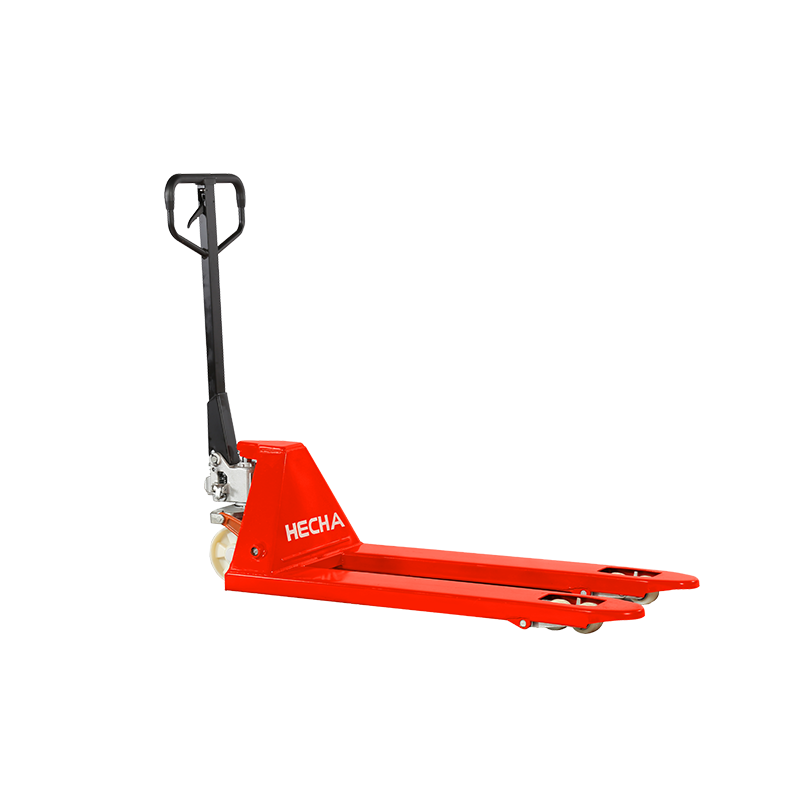 Custom 2.0-5.0 Ton Hand Pallet TruckA 2.0–5.0 ton manual pallet truck with reinforced heavy-load frame, anti-slip features, and manufacturer-backed service parts for long-term use.View Product →
Frequently Asked Questions
Q1: How often should a hand pallet truck be serviced?
A visual check before each shift, greasing every four to eight weeks, a hydraulic oil level check every six months, an oil change and seal inspection once a year, and a full seal kit every 12 to 24 months depending on movement volume.
Q2: What hydraulic oil does a hand pallet truck use?
ISO VG 32 is the standard choice, with VG 46 for hot environments. Never mix grades or brands. A typical truck takes 0.3 to 0.5 litres, so buy small containers instead of storing a drum that absorbs moisture.
Q3: Why does my hand pallet truck sink under load?
Either the piston seals are worn or the lowering valve is not seating fully. Fit a seal kit first, since it is the cheaper repair, and clean or replace the valve if the load still creeps down.
Q4: Can a bent fork be repaired?
No. Straightening a fork removes the strength designed into it, and there is no practical way to verify the result afterwards. Replace the fork assembly or the truck.
Q5: Is greasing more often better?
No. Two strokes per fitting every four to eight weeks is the right dose. Excess grease forces seals out of position and collects abrasive dust around the axle.
A hand pallet truck is a simple machine with a short list of parts that fail. Give it one minute a day, a grease gun once a month, fresh oil once a year, and a load it was actually designed to carry, and it will stay in service long enough that the maintenance log becomes boring. That is the goal.