English
 中文简体
 русский
 Français
 Español

Twelve pallets hit your dock at 8 a.m., and the racking has to be clear before the first outbound truck leaves at nine. On a manual pallet truck, one operator moves roughly 15 to 20 pallets an hour across smooth concrete, and by noon their shoulders are telling them about it. On an electric pallet truck, the same person clears 40 to 60 pallets an hour and still has energy for the afternoon count.
That gap, not the sticker price, decides most electric versus manual pallet truck purchases. The rule we hand to buyers is simple: choose electric once you move more than about 20 pallets per shift, handle loads above 1,000 kg, travel more than 30 metres per trip, or work on ramps. Stay manual when volumes are light, the floor is flat, and the truck spends most of the day parked. The rest of this guide shows where that dividing line comes from and how to price both sides of it.
The 20-Pallets-Per-Shift Rule, in Plain Numbers
A manual pallet truck is a pure muscle machine. The operator supplies the lifting force through the pump handle and the pulling force through their legs. On clean concrete, rolling resistance for a loaded pallet truck runs at roughly 2-3% of total weight, so a 1,000 kg pallet asks for a sustained push of about 20-30 kg. Add a 2% floor slope and another 20 kg appears. Most adults manage that for an hour. Very few manage it for eight.
An electric truck splits the work. One motor drives the hydraulic lift, and on powered-drive models a second motor moves the load, so the operator mainly steers and controls speed.
Manual Pallet Truck
15-20 pallets per hour
2,500-3,500 kg rated capacity
20-30 kg sustained push at 1,000 kg
No battery, no charger, no charging time
Electric Walkie Truck
40-60 pallets per hour
1,500-2,500 kg rated capacity
24V or 48V battery pack
1.5-2 h lithium charge, 6-8 h lead-acid
Electric Rider Truck
60-100+ pallets per hour
2,000-3,500 kg rated capacity
Built for long travel and multi-shift use
Highest purchase price, lowest cost per pallet
Watch the third card. Once travel distance per trip passes roughly 30 metres, walking becomes the bottleneck, and a ride-on truck pays for itself on throughput alone.
What Actually Changes When You Switch
The hardware difference is smaller than most buyers expect. A manual truck lifts 85-200 mm with a hand-pumped hydraulic cylinder, usually 20-30 handle strokes to full height. An electric truck keeps the same forks, chassis and lift height but replaces the pump handle with a motor-driven pump and adds a traction drive on walkie and rider models. Neither one puts a pallet into racking; that job belongs to a stacker or a reach truck.
- Speed. A person pushing a tonne of cargo walks at 3-4 km/h. An electric walkie runs at 4-6 km/h, and a rider model is faster again.
- Ramps and dock plates. Manual trucks become genuinely risky above a 2% slope. Electric models with electromagnetic brakes handle the 5-8% grades common at loading docks.
- Stamina per shift. Fatigue is the hidden cost. A tired operator at hour seven moves slower and takes more risks than the same person at hour one.
For dock work, specify a powered-drive model rather than a simple lift-only unit, because the traction motor is what keeps a loaded truck under control on a slope.
Electric vs Manual Pallet Truck: Side-by-Side
Use the table below as a screening tool. If two or more rows land in the right-hand column, the electric route is almost always the better buy.
| Factor | Manual Pallet Truck | Electric Pallet Truck |
|---|---|---|
| Power source | Operator muscle | 24V or 48V battery and motors |
| Lift mechanism | Hand pump, 20-30 strokes | Motor-driven hydraulic pump |
| Lift height | 85-200 mm | 85-200 mm |
| Rated capacity | 2,500-3,500 kg | 1,500-2,500 kg (walkie) |
| Travel speed | 3-4 km/h, walking pace | 4-6 km/h walkie, higher for rider |
| Throughput | 15-20 pallets per hour | 40-60 walkie, 60-100+ rider |
| Ramps | Under 2% only | 5-8% with powered brake |
| Upfront cost | Lowest | Three to ten times a manual unit |
| Running cost | No energy cost | Electricity plus battery replacement |
| Maintenance focus | Wheels, seals, pump, forks | Battery, charger, brakes, controller, wheels |
| Best fit | Light, occasional, flat-floor work | Repetitive, heavy, long-distance work |
Where the Money Actually Goes
Upfront prices are not close. A 2.5-tonne manual pallet truck typically lands in the low hundreds, a comparable electric walkie in the low thousands, and a ride-on model several times that again. The mistake is treating the first number as the whole bill.
Battery chemistry. Lead-acid costs less to buy but more to live with: 6-8 hours to charge, a cooling period before the next shift, regular watering, and ventilation for the gases released while charging. Lithium costs roughly two to three times more upfront, accepts opportunity charging during breaks, needs no watering, and delivers more cycles over its working life. For single-shift sites with a dedicated charging corner, lead-acid is still the pragmatic pick. For two-shift sites, lithium usually wins.
Labour. This is the line that settles the argument. Moving 150 pallets a day takes about 8 operator hours manually and around 3.5 hours electrically. The saving only becomes cash when it removes overtime, shortens a shift, or avoids a hire, but when it does, a mid-range electric truck can repay its price difference within months.
Budget rule of thumb: compare the price gap between the two trucks with the overtime you already pay in a year. If the gap is smaller than twelve months of overtime, electric wins.
Safety, Fatigue and the Cost of a Bad Back
Manual pallet trucks are not unsafe tools; they are misused tools. The injuries come from repetition: hundreds of pulls and lifts per month, plus the occasional attempt to drag a stuck pallet up a wet ramp. Push and pull forces above roughly 20-25 kg, repeated dozens of times per shift, sit outside the comfort zone in most manual handling guidance.
Electric trucks remove most of that strain but introduce their own risks. A 1,500 kg truck travelling at 6 km/h carries real momentum, and fork tips and wheel guards are pinch points. Safe deployment means marked pedestrian lanes, a horn before blind corners, controlled ramp descent, and documented operator training instead of a five-minute handover. Charging areas matter too: lead-acid packs need ventilation, and lithium packs need a dry, temperature-stable corner away from racking.
We look at the health side of this trade-off in more detail in our comparison of electric and manual pallet trucks in daily warehouse use.
Matching the Truck to Your Actual Workflow
Specifications only matter once they meet a real task. Here is how the two options usually land in practice.
Retail backroom or small workshop
Ten to twenty pallets a day, flat floor, trips under 20 metres. A 2.5-3.5 tonne manual hand pallet truck is the honest answer here, and going electric simply adds a battery to maintain.
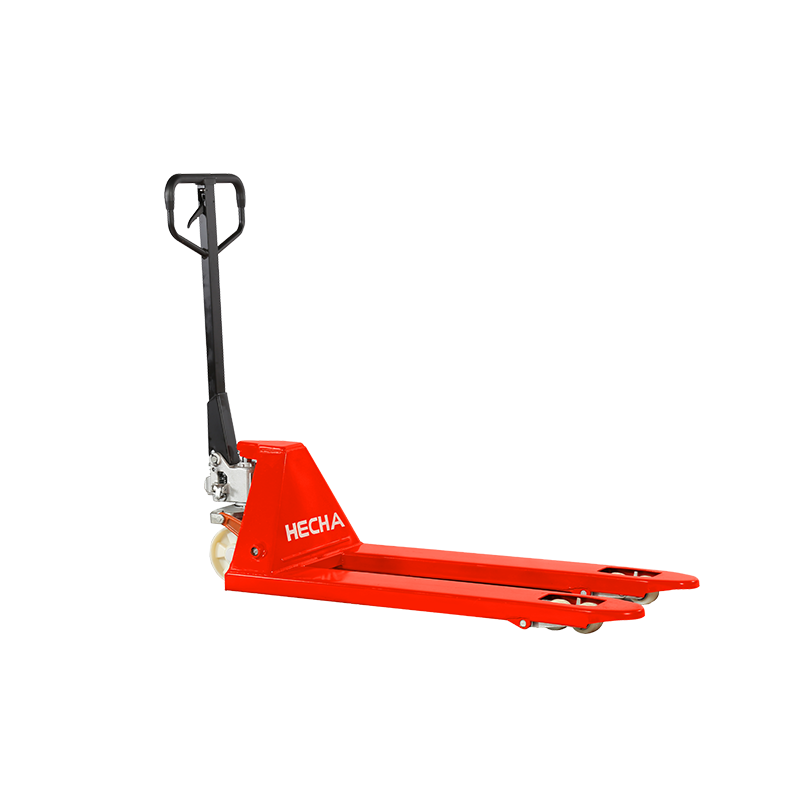 2.0–5.0 Ton Manual Hand Pallet TruckFor short trips and moderate daily pallet counts, this manual hand pallet truck offers a 2.0–5.0 ton load range and no battery maintenance.View Product →
Distribution warehouse, one shift, 100-300 pallets a day
This is the sweet spot for an electric walkie pallet truck with a lithium pack. Trips of 30-60 metres make walking the bottleneck, and top-up charging during breaks keeps one battery in service all day.
Cold storage
Freezer work changes the maths twice. Thick hydraulic oil stiffens the manual pump, and the operator is pumping in gloves at minus 25. Electric trucks need cold-rated batteries and lubricants, but they hold the pace.
Dock work and container unloading
Dock plates rule manual trucks out for anything heavier than light loads. Choose an electric model with a powered brake and a stated climb rating, and check the plate's own load limit rather than the truck's.
Anything above knee height
Neither truck puts a load on a rack. Once pallets must reach 1.6 metres or higher, you are shopping for an electric stacker or a reach truck, and the pallet truck becomes the transport tool that feeds it.
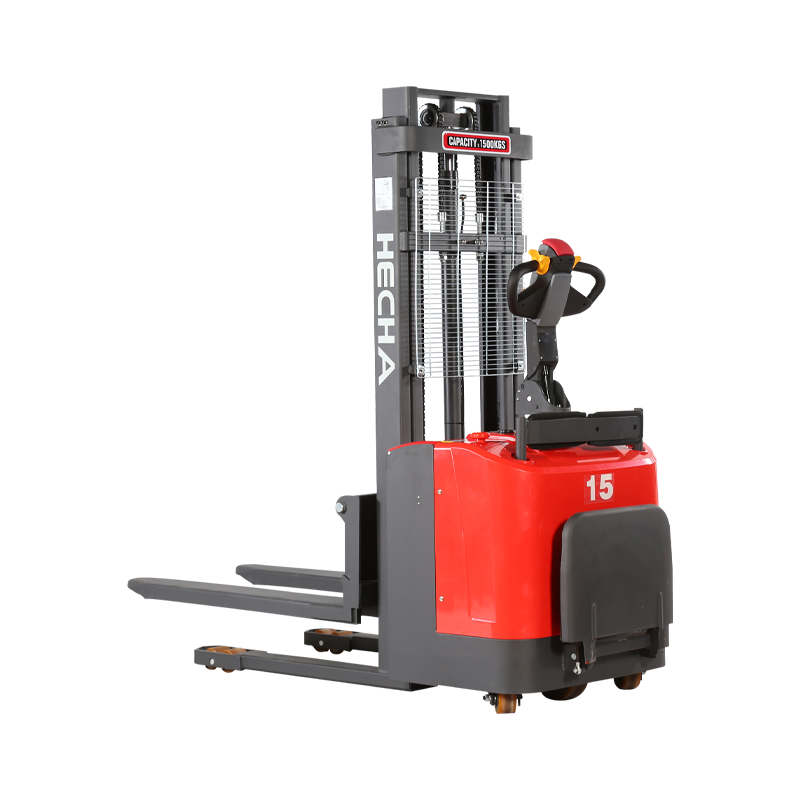 Stand-on Electric Stacker (2–6 m Lifting)When pallets must reach above 1.6 metres, this all-electric stand-on stacker offers 2–6 m lifting height and 2,000 kg capacity.View Product →
The models mentioned above, plus the rest of the warehouse equipment line, are listed on our full product range page.
Frequently Asked Questions
Q1: Can an electric pallet truck completely replace a manual one?
In most warehouses moving more than 20 pallets per shift, yes. Keep one manual truck as backup for power cuts, charging downtime, and tight corners where you would rather not move battery weight.
Q2: How long does an electric pallet truck run on one charge?
A typical 24V lithium walkie covers an 8-hour shift and often part of a second one with break-time top-ups. A lead-acid equivalent needs a full 6-8 hour charge plus a cooling period, so two-shift sites either buy spare batteries or switch chemistry.
Q3: Can an electric pallet truck handle a ramp?
Powered models with electromagnetic brakes handle grades of roughly 5-8% when loaded within rating. Always confirm the rated gradient against the actual dock plate, and never descend a ramp with the load on the downhill side.
Q4: What maintenance does each type need?
Manual: wheels, hydraulic seals, the pump, and fork straightness. Electric: the same list plus battery health, charger condition, brake function and controller diagnostics. Budget more for electric spares and less for operator downtime.
If there is one line worth keeping, it is this: buy the truck that matches your pallets per shift, not the one with the smaller invoice. Manual trucks remain excellent tools for light, flat-floor, low-frequency work, and they cost very little to keep running. Above roughly 20 pallets per shift, 1,000 kg loads, or any regular ramp, the labour arithmetic turns decisively towards electric, and the earlier that switch happens, the fewer backs you pay for along the way.